The movie stemming from 350.org's "Do the Math" tour last year has been released -- and it's a great watch. Check it out for Earth Day and get involved:
Stay going.
Showing posts with label 350. Show all posts
Showing posts with label 350. Show all posts
Monday, April 22, 2013


Thursday, December 20, 2012
Divestment 3: Hip Hop & Push Back
I bumped into the endowment manager of a small liberal arts college at a holiday party. I asked about the practical concerns some have expressed about the feasibility of divesting from fossil fuels, when endowments allocate assets to various management funds who invest in co-mingled funds, and the like. His response was straightforward: "no problem, I could get us out of fossil fuels next week, and if the investment committee tells me to do it, I will, doesn't matter to me."
I'm not sure if that perspective would be universal among endowments managers, but it may put that aspect of the conversation to bed.
 Although I'm not sure that's good news for the divestment movement. The more I look at this, the more convinced I become that the best thing for the goals of the campaign would be if most endowments continue to refuse to divest.
As this post by Carol Pierson points out, negative SRI screens have had little impact on curbing things like guns and tobacco over their long history. As I pointed out in this previous post, it's unlikely that if all endowments sold their fossil fuel stocks, the markets or fossil fuel companies would notice.
What fossil fuel companies, the markets, and the general public will likely notice is millions of students raising hell. And if endowments continue to stand their ground, that could happen. The campaign has now spread to 192 campuses.
The divestment movement also got a boost from skeptics with a WSJ opinion piece by Robert Bryce (subscription required). Divestment proponents were quick to point out Bryce's financial ties to the fossil fuel industry and provide rebuttals to his argument.
Fox News also acknowledged the campaign (and tried to dismiss it as childish).
The campaign is also getting wisely leveraging the arts to get people involved -- too often sustainability efforts focus on science, dire warnings, and restricting behavior. I'm convinced the only way to really engage people in leading the kinds of changes needed to create a sustainable society is through the arts. Here's one example with the official divestment music video:
Stay going.
...
Wednesday, December 05, 2012
Divestment 1: Intro to the Fossil Fuel Divestment Movement
Over the past year or so,
various efforts from coalitions of NGOs and student groups have emerged calling
on college and university endowments (and other institutional investors) to
divest from fossil fuel companies.
I’m planning on writing a
series of short posts on these efforts and the many interesting questions,
challenges, and conversations they raise.
This first post is just an
overview (the NYT also just ran this article summarizing this emerging movement):
There are two major
related, but distinct efforts:
·
Coal Divestment: launched in 2011, supported by a coalition
of 11 groups.1
o
Calls on college endowments to divest from coal with a focus
on 15 specific companies.
o
Active campaigns on approximately 20-25 campuses.
o
See the Coal Divestment Toolkit (pdf) for
details.
·
Fossil Fuel Divestment: launched in 2012, supported by a coalition
of 7 groups.2
o
Calls for college endowments (and others) to “immediately
freeze any new investment in fossil fuel companies, and divest from direct
ownership and any commingled funds that include fossil fuel public equities and
corporate bonds within 5 years.”
o
Focus on the top 200 coal and oil and gas companies, as
measured by their reserves
o
Based on the premise that to avoid an increase of global
average temperatures of more than 2°C, humanity cannot
release more than 565 gigatons of carbon dioxide before 2050, which is about
20% of the carbon potential in known fossil fuel reserves (2,795 gigatons) —
rendering 80% of known reserves “unburnable”
o
Currently, these reserves are treated as assets for the
entities that control them. If 80% are
unburnable, the valuations of fossil fuel companies are currently
misrepresented. This poses potential risks to individual investors, as well as
systemic risk to the financial markets as a whole.
o
These numbers are stem from this report (pdf) from the
Carbon Tracker Initiative (and are also the basis of Bill McKibben’s Rolling Stone article last summer
and 350.org’s just-completed “Do the Math” tour)
Key considerations:
·
There is an estimated $400 billion under management at
college and university endowments.
·
The net impact of divestment on stock prices and companies’
capitalization is unclear; only a portion of investments are in public markets,
and only a portion of those are in fossil fuel companies.
·
These efforts recognize that highly profitable fossil fuel
companies are not likely to stop extracting fossil fuels as a result of this
effort, but contend that drawing attention to this issue will highlight the
moral implications as well as financial, social and environmental risks of
fossil fuel investment.
·
There is evidence that proposed alternatives (such as
socially responsible investment funds, fossil fuel free funds, and on campus
revolving loan funds to support energy efficiency and renewable energy
projects) can generate competitive returns.
So far two small colleges have gotten on board the divestment train: Unity College in ME and Hampshire College in MA. The students at Harvard passed a referendum with 72% in support of divestment.
So, there you have the
basics of the fossil fuel divestment movements that are sweeping the nation. Subsequent
posts will look at questions like:
I’m intending this series to be a true exploration of very complex issues, probably with more questions than answers, and likely with my own opinions and thoughts shifting and evolving through the process.
I hope it will spark some generative dialogue, and I hope you will share your thoughts, opinions, resources, and questions liberally. And, please let me know if I’ve gotten any of the facts wrong about these efforts, and I will make the necessary corrections.
- What impact will divestment have? Will it affect the financial health of fossil fuel companies? Will it influence their investments in extraction vs. alternative energy sources?
- Is the real leverage of divestment in the financial impact, or the awareness impact of shining the spotlight on the risks of fossil fuel dependence? (Does that matter?)
- What impact might these efforts have on the policies of the investment funds that serve endowments? What about on the energy analysts at the big banks?
- How does natural gas as a potential transition fuel factor into all of this?
- What’s the end game of divestment?
- What could fossil fuel companies do to deter divestment? Shut their doors? Shift a certain percentage of R&D from exploration into renewables?
- What impacts might divestment have on endowment performance? What are the alternatives and how does their performance compare?
- What should Trustees be considering in light of these demands?
- And more…
I’m intending this series to be a true exploration of very complex issues, probably with more questions than answers, and likely with my own opinions and thoughts shifting and evolving through the process.
I hope it will spark some generative dialogue, and I hope you will share your thoughts, opinions, resources, and questions liberally. And, please let me know if I’ve gotten any of the facts wrong about these efforts, and I will make the necessary corrections.
Stay tuned… and Stay going.
[1] As You Sow; California Student Sustainability Coalition; Coal Swarm; Energy Action
Coalition; Green Corps; IB5k; Responsible
Endowments Coalition; Sierra Club;
Sierra Student
Coalition; Sustainable Endowments Institute
2 350.org; As You Sow; Better Future Project; California
Student Sustainability Coalition; Energy Action
Coalition; Responsible
Endowments Coalition; Sierra Student
Coalition; Campus Student
Groups (as of Nov. 19 there were 39 campuses listed on 350.org’s Fossil Free
website: http://gofossilfree.org/campus/)
…
Monday, November 19, 2012
What's going on... a quick news round-up
There has been a lot happening related to sustainability recently, particularly around climate. Of course, Sandy's devastation has people talking.
Here are a few highlights of articles and reports from the last couple of weeks that are of particular interest:

1) Investor Jeremy Grantham's opinion piece in Nature urges climate scientists to be more aggressive: "Be Persuasive. Be Brave. Be Arrested (if necessary)"
2) World Bank Report: "Turn Down the Heat: Why a 4 degree C Warmer World Must be Avoided"
 3) International Energy Agency: World Energy Outlook 2012
4) Obama made waves with comments at his first post-election press conference that could be interpreted as "climate action vs. jobs."
5) 350's "Do The Math" tour has been moving around the country, getting people engaged city by city.

Stay going.
Here are a few highlights of articles and reports from the last couple of weeks that are of particular interest:
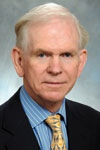
- Commodities prices have reversed their downward trend of the 20th century, rising dramatically over the past ten years.
- Climate change exacerbates these trends, particularly around food prices, which is particularly dangerous in light of the pending shortages of potassium and phosphorous fertilizers.
- "We need oil producers to leave 80% of proven reserves untapped to achieve a stable climate."
- "This is not only the crisis of your lives — it is also the crisis of our species’ existence."
- Warns the world is on track to a “4°C world” marked by extreme heat-waves and life-threatening sea level rise.
- Bank eyes increased support for adaptation, mitigation, inclusive green growth and climate-smart development.


- US could be energy independent by 2035 according to the report's central scenario (I've seen a few analysts question this conclusion).
- Global fossil fuel subsidies reached $523 Billion in 2011.
- A carbon price of $120 is needed to avoid the worst impacts of climate disruption.
- President Obama: "I think the American people right now have been so focused and will continue to be focused on our economy and jobs and growth that, you know, if the message is somehow we're going to ignore jobs and growth simply to address climate change, I don't think anybody's going to go for that."
- Bill Becker of the Presidential Climate Action Project wrote a good piece about a report from the Center for Climate Strategies showing that climate action can support economic activity and jobs.
- The numbers: we need to keep global average temperatures from rising more than 2 degrees. That means we can only release 565 more gigatons (at most) into the atmosphere. there are 2,795 gigatons in reserves - we can't burn it all. (see Grantham's point that we need to leave 80% of reserves in the ground)
- On Nov. 18 Protesters went to the White House opposing the Keystone XL Pipeline.
- Part of the tour is focused on getting university endowments (and other institutional investors) to divest from fossil fuels. Unity College's Board approved divestment and 72% of Harvard students voted in support of divestment.
Stay going.
Tuesday, May 15, 2012
Wednesday, April 18, 2012
It's happening: Being prepared for climate change
Over the past year at Second Nature I’ve been coordinating the “Higher Education Adaptation Committee” – a group of college and university administrators, climate scientists, sustainability professionals and educators exploring higher education’s role and responsibility in ensuring that society is prepared to weather the storms of climate change.
On Monday at the Smart and Sustainable Campuses Conference at the University of Maryland, I co-facilitated a session on this topic with David Caruso, President of Antioch University New England (who serves on the Adaptation Committee).
It proved to be a timely event. On the day of the session, temperatures in New Hampshire were expected to reach the 90s (in April!). It’s been a warm spring all over the northeastern US. And it was a warm winter. Not really a winter at all in many
places. Here, the mild weather doesn’t feel all that bad. But if you understand the implications of
climate disruption, it’s pretty horrifying.
I won’t run through the usual list of climate impacts – but
here are just a few of recent headlines:
- Drought Expands Throughout US
- Drought, Flooding And ‘Multiple, Combined Outbreaks’ Of Pests Threaten To Reduce Asian Agricultural Output 50%
- Hansen et al.: "Extreme Heat Waves... in Texas and Oklahoma in 2011 and Moscow in 2010 Were 'Caused' by Global Warming"
- Is Climate Change Bringing the Arctic to Europe?
- Arctic Warming Favors Extreme, Prolonged Weather Events
On May 5, 2012, the global network of concerned citizens
under the 350.org banner will be “connecting the dots” between
these impacts of climate change and what they represent in terms of economic
damage, ecological destruction and human suffering.
To minimize this damage, we need to continue to create better
ways of doing things. We need to
eliminate our greenhouse gas emissions and land-use changes that are driving
climate change.
We also have a moral obligation to prepare our society the
best we can for the impacts of climate change that are already happening and
will continue to happen based on changes already “locked in” from past
emissions.
Higher education has a particularly critical role - and responsibility - with regard to climate preparedness, which brings me back to our conference session:
I provided a quick overview of the Adaptation Committee’s work and the
report we published in November – Higher Education’s Role in Adapting to a
Changing Climate – which
provides a high-level look at what colleges and university are and should
be doing through education, research, community engagement, and campus operations
to prepare society for the impacts of climate disruption.
Dr. Caruso spoke about the role of presidents and senior
administrators in this process – emphasizing the need to engage governing
boards in the process. He also provided
compelling examples about how Antioch is weaving climate mitigation and adaptation
through cross cutting activities that encompass curriculum, research, campus
operations, and community engagement.
With the average tenure of a college president around five
years, it’s important to ensure continuity and long-term commitment via the
trustees. In most cases, it will likely
require a few years of persistent and skillful leadership from the president to
really integrate this understanding and perspective throughout the Board. But Trustees need to understand the risks
climate change poses to their campus – they have the fiduciary responsibility
for the institution. If they don’t
understand these risks, they aren’t fulfilling that responsibility.
The economic damages to campuses from stemming from climate impacts can be enormous (for example, see "Learning from Disaster" (pdf) - a report by UNCF on the impacts of Hurricane Katrina). More important than the costs, they pose serious health and safety risks to the students, faculty and staff. These could be direct impacts from extreme weather events on campus, or indirect from disruptions to agricultural production, supply chains, or critical infrastructure.
The economic damages to campuses from stemming from climate impacts can be enormous (for example, see "Learning from Disaster" (pdf) - a report by UNCF on the impacts of Hurricane Katrina). More important than the costs, they pose serious health and safety risks to the students, faculty and staff. These could be direct impacts from extreme weather events on campus, or indirect from disruptions to agricultural production, supply chains, or critical infrastructure.
Beyond the responsibility to their own campuses and
constituents, colleges and universities have a responsibility to all of society
to provide the education and research needed to prepare for climate impacts.
During our session, we engaged the group in a dialogue about
what was happening on their campuses, and around ways to teach students in all
disciplines not just about climate
adaptation, but for adaptation – so
that it’s not just climate scientists and ecologists who understand the
importance of adapting to these changes, but also economists, policy-makers,
city planners, journalists, teachers, and so on.
We spoke about how low-income communities and communities of
color are often more vulnerable in the face of climate impacts, and are often
hit “first and worst” by them. This
dynamics brings up important social justice issues that must be front-of-mind
in this work.
While many universities are conducting important research to
help communities in their regions understand the expected impacts and how to
respond to them, more comprehensive approaches are needed to ensure the level
of response that this challenge demands.
On the bright side, a recent poll shows that most Americans link these extreme weather events to global warming, and intuitively understand - at least to some degree - the risks. It's on all of us to ensure that we translate that understanding into action so we are as prepared as possible to minimize the damage and hardship.
Stay going.
Friday, August 12, 2011
Moving Planet - Sept. 24, 2011
Mark your calendars and get your bike geared up for Moving Planet on Sept. 24, 2011 -- raise awareness about getting atmospheric concentrations of CO2 back down to 350 parts per million:
Stay going.
Tweet
Stay going.
Tweet
Thursday, June 09, 2011
Making Connections
We know the human brain isn't great at conceptualizing time. Events can simultaneously "feel like yesterday" and "like a lifetime ago." With our busy day-to-day extreme events can fade from memory altogether - headline news, millions of people's lives forever changed. This video helps remind us of what we've seen in the past few years -- the expected impacts of greenhouse gas emissions from years ago, decades ago, accumulating and now resulting in more frequent and extreme record-breaking weather events.
As a result of our inaction and lack of global leadership to reduce emissions over the past 20 years, more and more people in the scientific and sustainability communities are increasing their attention on adaptation - that is, recognizing that we've locked in significant impacts, how can we change our systems - agricultural, transportation, cities, energy - to handle the unpredictable impacts of climate disruption in the least painful way possible?
ICLEI's had an adaptation program since '06 and hosts an annual Resilient Cities event. Clean Air - Cool Planet's "Climate Preparedness" program also aims to help communities survive for more climate impacts. The National Academies of Science has more resources and reports on adaptation. The federal government recognizing the threat to Americans this poses, and requested an interagency report last year. The threat climate disruption poses to the global economy and rich and poor people alike is clear to the Economist. Business managers are increasingly being called on to evaluate how climate impacts will impact their business. On Monday Fast Company ran a story titled "The 'New Normal' Weather."
That last piece is authored by Curt Stager, whose president at Paul Smith's College, John Mills, is serving on the Higher Education Climate Adaptation Committee - a group we've convened through the ACUPCC, made up of college and university presidents, scientists, and other experts to evaluate how our institutions of higher learning should be preparing society to be more resilient in an unstable future - through their education, research, operations, and community engagement. (Stager's also got a new book out - Deep Future: The Next 100,000 Years of Life on Earth - which I'm about to dive into.)
With dangerous heat advisories in effect in NYC and the tristate area, in early June, it's not hard to keep the need to adapt this front-of-mind. In fact, if you're paying attention, it's impossible not to.
Stay going.
Tweet
Friday, April 08, 2011
350 Takes on the US Chamber of Commerce
I picked up the video below via GOOD. It's about 350.org's "The US Chamber Doesn't Speak for Me" campaign, and getting people amped for PowerShift. Enjoy:
Stay going.
Tweet
Stay going.
Tweet
Sunday, January 23, 2011
Write a Letter, Be Counted
Before the holidays, I wrote about an emerging campaign called The Million Letter March. The concept is to get as many people as possible to write a personalized, hard-copy letter to their representatives, encouraging them to show some leadership on climate action, and work to recognize the true costs of emitting greenhouse gases by putting a price on carbon.
With the new Congress, much of the focus is still on ideological, political bickering. A strong showing of personalized letters will show that there is support for climate action - and doing so through this project which tracks the letters, will help show the collective impact of many people understanding the importance of moving on this issue.
It will take about 5-10 minutes to write and print your letter, record it in their system and put a stamp on the envelope. So please go to www.millionlettermarch.org and click "Write Your Letter" at the top of the column on the left. They have some sample text if you're looking for inspiration - below is a copy of what I sent. It's not necessary to make every point about why pricing carbon is important - national security, health, driving innovation, saving lives, protecting ecosystems, creating jobs, etc. etc. - but make one or two that are particularly important to you and send it off!!
Stay going.
Tweet
With the new Congress, much of the focus is still on ideological, political bickering. A strong showing of personalized letters will show that there is support for climate action - and doing so through this project which tracks the letters, will help show the collective impact of many people understanding the importance of moving on this issue.
It will take about 5-10 minutes to write and print your letter, record it in their system and put a stamp on the envelope. So please go to www.millionlettermarch.org and click "Write Your Letter" at the top of the column on the left. They have some sample text if you're looking for inspiration - below is a copy of what I sent. It's not necessary to make every point about why pricing carbon is important - national security, health, driving innovation, saving lives, protecting ecosystems, creating jobs, etc. etc. - but make one or two that are particularly important to you and send it off!!
Dear Senator,Please do everything in your power to put a price on carbon. Climate disruption from greenhouse gas emissions is already wreaking havoc on people in the US and around the world, and the longer we wait to take meaningful action, the worse it will get. The economic impacts of this disruption will be enormous. More importantly, there is no way to put a price on the hundreds of millions of lives that are at stake, or on a species, or a place.We must do everything in our power to eliminate our greenhouse gas emissions as quickly as possible. I support the Million Letter March Principles, found at www.MillionLetterMarch.org, and would welcome a carbon tax. We need to adopt a science-based target of 350 parts per million atmospheric concentrations of CO2, and take the most sensible and effective measures of getting there.Putting a price on carbon immediately is a necessary first step. Luckily, it is also one that will drive innovation, produce entire new industries, and create millions of jobs.Please support a price on carbon through fair, effective climate legislation. Thank you, and I look forward to your response.Sincerely,
Georges Dyer
Stay going.
Tweet
Wednesday, December 29, 2010
350 eARTh Video
A great re-cap video of the eARTh project organized by 350.org last month. Check out their new year-in-review webpage too.
Stay going.
Tweet
Stay going.
Tweet
Sunday, December 12, 2010
COP16 Wraps Up in Cancun
Another year of international climate negotiations wraps up as the 16th Conference of the Parties (COP) concludes in Cancun, Mexico. There was much less hype around this year's meeting than there was about last year's COP 15 in Copenhagen, and while there was no big, binding agreement, most reports indicate that solid progress was made, and importantly, faith in the process was restored.
Kate Sheppard's recap on grist.org provides a great, quick review of the highlights and outcomes.
What's discouraging though, is that in the US no one really knows - or cares - that this process is happening and how important it is. Below is a total bummer of a video showing a "people on the street" view in the country responsible for the vast vast majority of global emissions (particularly when you look at cumulative emissions over time, and the fact that most of China's emissions go to support stuff for us) are completely unaware of what's going on.
CANCUN 2010 (COP 16): What if They Threw a Climate Conference and Nobody Cared?
- Watch more Videos at Vodpod.
Vested interests here in the US (again, the location of the activities and demand for goods responsible for the vast majority of the world's emissions) continue to fight for the status quo and successfully confuse the issue to the point where it's no wonder most people don't get the information or just block it out.
Still, progress continues to be made and there are positive signs - the R20 initiative is mobilizing sub-national government action, the ACUPCC is demonstrating the higher education sector's leadership, 350.org is raising awareness and building an international grassroots movement, DeSmogBlog is uncovering the climate cover-up day-in and day-out to help people identify and see past the disinformation campaigns, the newly announced Open Climate Network will bring transparency to measuring nations' progress on climate action, ICLEI is helping local communities reduce emissions, RGGI has put a price on carbon in the Northeast, and much much more.
But it's all just early steps in terms of where we need to be to avoid the worst impacts of climate disruption and to weather the impacts that its already too late to avoid the best we can. Staying up to speed on the policies and solutions, and continuing to diligently support all of the parts solution - large and small, from calling senators and signing petitions to installing LED lightbulbs and geothermal heat pumps - is critical if we're to be successful.
Stay going.
Tweet
Monday, November 22, 2010
eARTh 350 kicks off
On Friday I wrote about the launch of eARTh 350. Well, it's launched. The AFP article below tells the story, and has been reposted on some 2,420 news sites and blogs, I just wanted to make it 2,421. And show you some of the early pictures taken from the satellite:
 |
| 350 Earth - Los Angeles |
 |
| 350 Earth - Santa Fe |
 |
| 350 Earth - Santa Domingo, DR |
 |
| 350 Earth - Mexico City |
 |
| 350 Earth - Delta Del Ebro, Spain |
Art on planetary scale shines spotlight on climate change
LOS ANGELES — The first global art show on climate change kicked off this weekend, launching several symbolic performances seen from space that bring people and planet together to highlight the hazards of global warming.
From the US southwest to spots in countries like China, Egypt, India and Spain, thousands of volunteers were coming together for the weeklong photo-performance project that ends November 27, just ahead of UN climate talks in Cancun, Mexico.
Using human bodies as the main media, the show was organized by US environmentalist Bill McKibben and his 350 Earth advocacy group, whose name points to the number of parts per million that most scientists agree is an acceptable upper level of carbon dioxide in the atmosphere.
Currently, that level is about 390 parts per million.
The group brought the global project into focus Saturday in the United States and Spain.
In Santa Fe, New Mexico, more than 1,000 Girl Scouts and other residents holding blue posters crammed into a dry riverbed to form a human "flash flood" depicting where the Santa Fe River should be flowing.
"It's hot in here, there's too much carbon in the atmosphere!" the volunteers chanted.
At 10:53 am, participants flipped their cardboard posters to the blue side so a passing satellite could photograph them from orbit.
People also gathered in Delta Del Ebro, Spain to walk through a huge maze conceived by artist Jorge Rodriguez Gerada, while in New York a painting depicting the New York and New Jersey coastline after a seven-meter (23-foot) rise in sea levels was unveiled on a rooftop and photographed from space.
Thom Yorke, lead singer of rock supergroup Radiohead and an advocate of climate action, put a succinct message about the 350 Earth project on his band's website.
"The plan is to make images visible from the skies to remind those in Cancun that we are running out of time. We can't keep putting this off," Yorke wrote.
On Sunday thousands were gathering at a state park outside Los Angeles to form a giant image of an eagle taking flight over a field of solar panels, while on Monday in Mexico City, thousands of children will create a huge hurricane, with the number 350 depicted in the eye of the storm.
Mumbai will see schoolchildren group together in the shape of an elephant to represent the "elephant in the room" that is climate change.
In Australia, a torch display will form the number "350," in a warning about the risk of more wildfires if global warming is not halted.
And in Iceland, artists at the foot of a receding glacier plan to arrange red rescue tents in the shape of a giant polar bear.
McKibben acknowledged before the project that technical terms can be weak when it comes to inspiring people to change, but he was confident the images photographed from space would resonate with those who see them.
"One of the things I hope this achieves is to remind people that we live on a planet. Just like Venus and Mars, we are a hunk of rock out in space and our future depends on, among other things, the gaseous composition of our atmosphere," McKibben said.
The UN forum has made dismal progress toward a global deal to reduce harmful emissions, and McKibben said was he not optimistic about the Cancun talks.
"I think it is going to be a longer process than everyone has hoped."
-----
Stay going.
TweetFriday, November 19, 2010
350 Earth Art
 Climate art visible from space. That's what's coming up next from the 350.org crew. 350 Earth will be the first art exhibit visible from space.
Based on the premise that the earth rise photo created an immediate shift in consciousness for humanity - providing a dramatic, visual reminder that we're indeed on a spaceship, and its the only one we've got.
Even if we didn't articulate it this way, it drove a visceral realization that we've got energy coming in from the sun, but materials don't come in and go out (aside from the odd meteor or satellite) - there is no "away" for poisons we create or pull out of the earth's crust (the basic premise behind Sustainability Principles 1 & 2); and that we can't continually use up or destroy the resources faster than they regenerate naturally (SP 3); and we've got to find basic ways to live together, respect each other and keep the social fabric from falling part (SP 4).
 A new report from UC Berkeley shows that dire messages about climate change can backfire if presented too negatively - increasing skepticism and inaction. It says people generally see the world as just (or want to believe it is) - and reject the idea that we would create an apocalyptic for ourselves and future generations. We all know we're not 100% rational creatures.
As I write I'm listening to Wake Up - the new album from John Legend and the Roots the revisits classic songs that drove social movements in the '60s and '70s. It's clear we need powerful art like that now. It's a good thing we're getting it.
From November 20-28 artists and citizens at over a dozen locations will create massive art installations that satellites will photograph from space.
Bill McKibben, in many ways the voice of 350.org said "I think it's going to be very powerful. Art gets to people in ways that science doesn't."
The series of installations are timed to happen before the annual international climate negotiations - COP 16 - happening in Cancun, Mexico in early December. Most people aren't expecting much to come out of these meetings. Sometimes that's when things can happen.
Stay going.
Tweet
Friday, October 29, 2010
Global Work Party
It's been a crazy couple of weeks - the 4th Annual Climate Leadership Summit of the ACUPCC was a great success a couple of weeks ago in Denver, and last week we had the opportunity to participate in an exciting milestone of Penn State's strategic sustainability planning process. In both cases, high-level decision makers from our country's institutions of higher learning were coming together to essentially imagine themselves and their institutions in a sustainable future, and look back to 2010 to see what we had done to get there.
Bill McKibben performs a similar backcasting exercise in his latest piece in the Solutions journal - looking back from 2100 and recounting how the events of 2010 and 2011 started a real concerted push towards 350 ppm. The Global Work Parties last month were a big help and inspiring - see the video below.
I think it's particularly important to share this video ahead of Tuesdays elections. Here in the US we get a very slim and distorted slice of the real news - we forget the rest of the world is out there - and the discourse on climate disruption and solutions is very different than what's coming across in our political arena (like this campaign ad for West Virginia Democrat Joe Manchin where he literally shoots the cap & trade bill with a rifle (and not because it's a free-market solution based on Republican principles) - http://www.youtube.com/watch?v=xIJORBRpOPM)
China, India, Europe, and the rest of the world are moving ahead with solutions, and we're risking missing the greatest economic opportunity, certainly since the Industrial Revolution, and possibly ever, by bowing to vested interests. We've got to wake up and get moving towards a visions of a sustainable future.
Stay going.
Sunday, September 05, 2010
Solar Road Trip
On this Tuesday night (Sept. 7, 2010), the Solar Road Trip will stop in Boston. Second Nature has teamed up with Unity College, 350.org, Students for a Just and Stable Future, and others to help promote this exciting trip.
Author Bill McKibben and a team of students from Unity College in Maine travel to Washington D.C. to deliver one of the original Carter panels to President Obama, asking him to reinstall solar on the White House, and to follow this symbolic gesture with substantial legislative action.
Second Nature President Tony Cortese will speak, along with Bill McKibben and other leaders, about the importance of taking action on climate and energy. This should be a major press event, and a strong showing of supporters will go along way to raise the profile of these efforts – please join us on Tuesday night!
Here are the details of the event:
And if you didn’t catch Bill McKibben on Letterman Tuesday night, watch the clip here.
 |
| Carter solar panels on the cafeteria of Unity College (image source: huff-po) |
Author Bill McKibben and a team of students from Unity College in Maine travel to Washington D.C. to deliver one of the original Carter panels to President Obama, asking him to reinstall solar on the White House, and to follow this symbolic gesture with substantial legislative action.
Second Nature President Tony Cortese will speak, along with Bill McKibben and other leaders, about the importance of taking action on climate and energy. This should be a major press event, and a strong showing of supporters will go along way to raise the profile of these efforts – please join us on Tuesday night!
Here are the details of the event:
- Date: Tuesday, September 7
- Location: Old South Church, Copley Square, Boston
- Schedule:
- 5:30pm - Bicycle pedal-powered climate rock band, Melodeego
- 6:00pm - Guest Speakers, including Bill McKibben (of http://www.350.org), Tony Cortese (of http://www.secondnature.org), representatives from Students for a Just and Stable Future and Interfaith Power and Light
- 7:00pm - Screening of "A Road Not Taken," new documentary that tells the story of the original Carter White House solar panel installation.
And if you didn’t catch Bill McKibben on Letterman Tuesday night, watch the clip here.
Stay going.
Subscribe to:
Posts (Atom)