Showing posts with label ecological economics. Show all posts

Monday, May 12, 2014

Pluralism in Economics

Last week The International Student Initiative for Pluralism in Economics (ISIPE) released an open letter (below) demanding pluralism in the discipline of economics.   This holds the promise of the beginning of an important phase in the effort to better align economic theory with real world -- particularly in light of what as become clear in recent decades in terms of the cumulative impact of our global economic system on social and ecological systems.

One of the most important challenges of creating a sustainable society is updating our mental models about economic theory -- in the classroom, the academic literature, and the real world.  These students will be critical in bringing about that necessary change:

-----

It is not only the world economy that is in crisis. The teaching of economics is in crisis too, and this crisis has consequences far beyond the university walls. What is taught shapes the minds of the next generation of policymakers, and therefore shapes the societies we live in. We, 42 associations of economics students from 19 different countries, believe it is time to reconsider the way economics is taught. We are dissatisfied with the dramatic narrowing of the curriculum that has taken place over the last couple of decades. This lack of intellectual diversity does not only restrain education and research. It limits our ability to contend with the multidimensional challenges of the 21st century - from financial stability, to food security and climate change. The real world should be brought back into the classroom, as well as debate and a pluralism of theories and methods. This will help renew the discipline and ultimately create a space in which solutions to society’s problems can be generated.

United across borders, we call for a change of course. We do not claim to have the perfect answer, but we have no doubt that economics students will profit from exposure to different perspectives and ideas. Pluralism could not only help to fertilize teaching and research and reinvigorate the discipline. Rather, pluralism carries the promise to bring economics back into the service of society. Three forms of pluralism must be at the core of curricula: theoretical, methodological and interdisciplinary.

Theoretical pluralism emphasizes the need to broaden the range of schools of thought represented in the curricula. It is not the particulars of any economic tradition we object to. Pluralism is not about choosing sides, but about encouraging intellectually rich debate and learning to critically contrast ideas. Where other disciplines embrace diversity and teach competing theories even when they are mutually incompatible, economics is often presented as a unified body of knowledge. Admittedly, the dominant tradition has internal variations. Yet, it is only one way of doing economics and of looking at the real world. This is unheard of in other fields; nobody would take seriously a degree program in psychology that focuses only on Freudianism, or a politics program that focuses only on state socialism. An inclusive and comprehensive economics education should promote balanced exposure to a variety of theoretical perspectives, from the commonly taught neoclassically-based approaches to the largely excluded classical, post-Keynesian, institutional, ecological, feminist, Marxist and Austrian traditions - among others. Most economics students graduate without ever encountering such diverse perspectives in the classroom.

Furthermore, it is essential that core curricula include courses that provide context and foster reflexive thinking about economics and its methods per se, including philosophy of economics and the theory of knowledge. Also, because theories cannot be fully understood independently of the historical context in which they were formulated, students should be systematically exposed to the history of economic thought and to the classical literature on economics as well as to economic history. Currently, such courses are either non-existent or marginalized to the fringes of economics curricula.

Methodological pluralism stresses the need to broaden the range of tools economists employ to grapple with economic questions. It is clear that maths and statistics are crucial to our discipline. But all too often students learn to master quantitative methods without ever discussing if and why they should be used, the choice of assumptions and the applicability of results. Also, there are important aspects of economics which cannot be understood using exclusively quantitative methods: sound economic inquiry requires that quantitative methods are complemented by methods used by other social sciences. For instance, the understanding of institutions and culture could be greatly enhanced if qualitative analysis was given more attention in economics curricula. Nevertheless, most economics students never take a single class in qualitative methods.

Finally, economics education should include interdisciplinary approaches and allow students to engage with other social sciences and the humanities. Economics is a social science; complex economic phenomena can seldom be understood if presented in a vacuum, removed from their sociological, political, and historical contexts. To properly discuss economic policy, students should understand the broader social impacts and moral implications of economic decisions.

While approaches to implementing such forms of pluralism will vary from place to place, general ideas for implementation might include:
  • Hiring instructors and researchers who can bring theoretical and methodological diversity to economics programs;
  • Creating texts and other pedagogical tools needed to support pluralist course offerings;
  •  Formalizing collaborations between social sciences and humanities departments or establishing special departments that could oversee interdisciplinary programs blending economics and other fields.
Change will be difficult - it always is. But it is already happening. Indeed, students across the world have already started creating change step by step. We have filled lecture theatres in weekly lectures by invited speakers on topics not in the curriculum; we have organised reading groups, workshops, conferences; we have analysed current syllabuses and drafted alternative programs; we have started teaching ourselves and others the new courses we would like to be taught. We have founded university groups and built networks both nationally and internationally. 

Change must come from many places. So now we invite you - students, economists, and non-economists - to join us and create the critical mass needed for change. See Support us to show your support and connect with our growing networks. Ultimately, pluralism in economics education is essential for healthy public debate. It is a matter of democracy.

Signed, the member organizations of the International Student Initiative for Pluralism in Economics.
 -----

Stay going. 
-
 

Wednesday, February 29, 2012

The Green Economy is Charging

The latest update to the Green Transition Scoreboard shows that the green economy remains strong, even as the broader global economy struggles.  From the CSRwire press release:


Ethical Markets Media, LLC (USA and Brazil), released their 2012 GREEN TRANSITION SCOREBOARD® tracking private sector investments since 2007 in green companies and technologies globally, now totaling more than $3.3 trillion.

The 2012 Green Transition Scoreboard® (GTS) report finds Asia, Europe and Latin America catching up with the USA in total non-government investments and commitments for all facets of green markets.  2011 ended with a GTS total of $3,306,051,439,680, starting from 2007.  Given the many studies indicating that investing $1 trillion annually until 2020 will accelerate the Green Transition worldwide and the over 100 research reports and articles referenced in this years' update, the "Green Transition Scoreboard® 2012: From Expanding Cleantech Sectors to Emerging Trends in Biomimicry" definitively shows green investments are becoming the norm.
The article also quotes Tim Nash, fellow graduate of the MSLS Program at BTH, who has played a central role in conducting these assessments:


"One example is the recent burst of activity in the M&A space, largely due to companies spending cash they've hoarded since the 2009 credit crunch.  They are finally ready to deploy capital and are expanding into the green space.  In addition to developing R&D in-house, firms like Google, DuPont, and Toshiba are acquiring small and medium-sized cleantech companies."

These are important and encouraging trends.  Many thanks to Ethical Markets for conducting this research.

Stay going.

Sunday, December 04, 2011

Occupy Economics

Check out the video below from economists voicing their support for the Occupy Wall Street movement, and acknowledging some of the failures in the discipline to avoid the recent economic collapse.  See also the statement of support and list of about 250 economists that have added their names so far.


Occupy Economics from Softbox on Vimeo.

The OWS movement is an excellent example of what happens when the ways in which we go about meeting our needs is socially unsustainable.  In the language of the sustainability principles, our economic system has "systematically undermined the capacity of some people (many people) to meet their needs" - eventually there will be consequences.

The video only touches on the ecological risks our current economic system poses to the continuation of a healthy, thriving global society, but it is a big step towards opening up the dialogue to a much wider audience. I hope this will help bring the work of ecological economists to the conversation in a much more meaningful way, so the discipline of economics can help us avoid the "big collapse" of broad, irreversible ecosystem failure, which will make our current economic woes look like a field day.

Stay going.

Friday, September 30, 2011

Sustainable Economy 2040

Forum for the Future has produced a great report for Aviva Investors called sustainable economy in 2040: a roadmap for capital markets (pdf)


In focusing on a key leverage point -- capital markets -- and taking a backcasting approach, the report gets around the usual stalemate of investors seeing the way things are and investing accordingly, while many in civil society cry foul as those investments accelerate our progress down an unsustainable path; and provides actionable steps for the investment community to take in creating a sustainable society.

It provides the rationale for why and strategies for how investors can be more proactive in creating the kind of economy we need in the long-run, with a focus on 5 key areas: energy, health & wellbeing, mobility, food, and finance.

The report also serves as a call to action ahead of the Rio +20 summit in June 2012.

A great resource, and worth the read.

Stay going.


Saturday, September 03, 2011

The Sustainability Bubble

A couple of weeks ago, Yale e360 published a great article by Christian Schwägerl titled "A Planetary Crisis is a Terrible Thing to Waste." It's a nice straightforward piece highlighted the similar dynamics in the failing economic system and failing ecological system.

The two of course are inexorably linked - or I should say, the economic system is a subset of the ecological system, the former doesn't exist without the latter (ecological systems of course would go right on truckin' in the absence of a human economic system).

Image: Erik Madigan Heck for 
The New York Times
This recent article about Jeremy Grantham - "Can Jeremy Grantham Profit from Ecological Mayhem?" - reinforces this basic tenet of sustainability.  As we approach "Peak Everything Else," we are inflating the biggest bubble of all time - but it's not prices that will fall when it bursts, it's our complex modern society.

Image: Chelsea Green
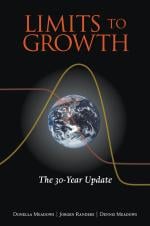
Given the size of the 'sustainability bubble' it inflates more slowly and there are factors that periodically let air out or enable it to grow bigger without popping, but eventually we know it will pop if we don't make dramatic changes to the way we do things.  Just like there were plenty of people who were brushed off for years as they pointed out the housing and credit bubble would burst, people who have been bringing attention to the sustainability crisis have had trouble really breaking into the mainstream - dismissed as alarmists.  Forty years ago the authors of Limits to Growth faced this dismissal.  Many often point to the famous bet between Paul Ehrlich and Julian Simon that the article references as proof that technology and innovation will save us when the price signals demand it; they picked 5 commodities and bet if their prices would be higher in the next 10 years.  Simon bet innovation would bring the prices down and he was right, 5-0.  But, as the article points out, today Ehrlich's winning 4-1.

Image: Chelsea Green
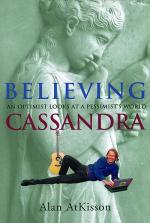
Alan AtKisson's Believing Cassandra does an excellent job of articulating this dilemma.  Of course, those of us who are shouting from the rooftops that there's trouble ahead want to be wrong.  We work every day to ensure that we are wrong.  The changes we need to make -- in our policies, our lifestyles, our technologies, our economic systems, our worldviews -- will enable us to create a sustainable future.  When we're successful in doing that, by definition, we will be wrong about the sustainability bubble bursting.  We will have avoided it.  And if we're not wrong - if we don't enact the shift to sustainability fast enough; well, it will make our current bubble-burst woes look like a holiday.

To systems-thinkers the parallels between economic bubbles and sustainability are obvious.  As a system is pushed beyond certain thresholds, it collapses or jumps to a new state.  We will cross that threshold as a global human society.  Our great challenge is to ensure that we do so by jumping to a new state - a sustainable society - and avoid devastating population collapse and further wholesale destruction of the life-support system upon which we depend.

It's encouraging to know there are investors like Grantham out there - sharing this perspective with a voice that is respected and credible with the mainstream investment community.  And it's heartening to see that his foundation is making such smart investments as well.

Stay going.

Saturday, April 23, 2011

The Capital Institute

The Capital Institute is exactly the kind of organization we need to start putting the concepts of ecological economics into action in the real world.

The videos below show a wide-ranging conversation between John Fullerton -- an ex-JP Morgan executive and the Founder and President of the Capital Institute -- and Robert Johnson, Executive Director of the Institute for New Economic Thinking.

Fullerton touches on a broad array of inter-related sustainability topics, including ecology, ecological economics, systems thinking, reductionism, transdisciplinarity, biomimicry, complexity science, interconnectedness, resiliency theory, social sustainability, happiness, and the purpose of capital.

It's clear that he's read and learned from the best, and has a lot to add to this field - I highly recommend working your way through each of the short clips below.


The Profound Ecological Implications of a Perpetually Growing Economy


Inspirational Authors Who Challenge the Growth Economy


Is Growth Becoming a Scarce Commodity? 


Rethinking Finance as a Part of the Whole


Systems Theory: Balancing Efficiency with Resiliency


Social Sustainability: Does Wealth Equal Happiness?


How Detroit Did Everything Wrong


A Challenge for the Next Generation


Mobilizing the Top 1%


Stay going.


Thursday, June 17, 2010

Life After Growth

How do we get smarter, not bigger?  How do we promote the growth of value, not the growth of stuff?  How do we increase well-being without increasing consumption?

This 20 minute video gives a good run through some of the attempts going on out there - degrowth, happiness indices, GDP alternatives, transition towns, post-carbon lifestyles, local production, etc.


Stay going. 

Monday, March 29, 2010

Fast Company & Making Sustainability Second Nature

Fast Company has featured four blog posts discussing higher education's role and progress in moving society towards a healthy and sustainable future. Co-authored by me and Second Nature President Tony Cortese, they are part of Fast Company's Inspired Ethonomics series:

Part 1 discusses how higher education must make creating a healthy, just, and sustainable society an overarching goal of higher education, and how the concept of sustainability, as former Cornell president Frank Rhodes suggests offers "a new foundation for the liberal arts and sciences."

Part 2 covers how Higher education must lead a process of re-thinking how we operate our society. It must transform its teaching, research, operations, and service to communities, and prepare graduates - 3 million per year - for 21st century businessif we are to have a chance at a thriving, peaceful, global society.

Part 3 talks about how students must experience sustainable living first hand and be involved in helping their schools become powerful role models of sustainable practices for the rest of society. As Michael Crow, President of Arizona State University (ASU), has said of the U.S. higher education sector: "We may only have 2% of the carbon footprint, but we have 100% of the education footprint," and as some wise old Chinese person said: Tell me and I will forget. Show me and I may remember. Involve me and I will understand.

4. Leadership for a Thriving World
Part 4 shows how leadership at all levels - from the students to the presidents and trustees - is making real change happen in higher education. From the 665+ institutions that have joined the American College & University Presidents' Climate Commitment to the Define Our Decade campaign from the Energy Action Coalition, this sector is providing much needed leadership, challenging business, government and the rest of us to follow suit.

Stay going.

Tuesday, March 02, 2010

The 9 Billion Ton Hamster

Check out this funny clip with a decidedly unfunny message from nef, One Hundred Months, and Wake Up Freak Out via our friends at the Global Footprint Network. They say:

In its recent report, Growth Isn’t Possible, UK-based nef (the new economics foundation) concludes that it is impossible to avoid the dangers of climate change as long as economic growth continues in high-income countries.

While it is impossible to have never-ending growth of stuff, it is possible to have an endless growth of value - that's the key differentiation between economic growth and economic development. A focus on the latter, and on how we more effectively meet our needs and live more fulfilling lives is central to a strategic approach to sustainable development.


Stay going.

Monday, October 26, 2009

Rushkoff

Thanks to ecological economist and outdated-world-view-destroyer Pete Sims for the heads up on Douglas Rushkoff. I haven't dug into his stuff too much yet, but a quick view of his session on the always hilarious Colbert Report makes it clear he's got some good things to say:


For more, his website is: http://rushkoff.com

Stay going...

Tuesday, September 29, 2009

The End of Poverty

Check out this trailer for what looks to be an excellent new movie, The End of Poverty. In theaters in November, it looks like it will do a good job of getting to the root of the major drivers of global poverty, and how our globalized economic system and our lifestyles exacerbate and increase that poverty.


Stay going.

Tuesday, August 11, 2009

Death to Gross Domestic Product

A well articulated opinion piece in the NY Times the other day - very exciting to see this kind of opinion making its way into the mainstream press. It underscores the huge opportunity to change patterns of thought that this global economic crisis presents:

http://www.nytimes.com/2009/08/10/opinion/10zencey.html?pagewanted=1&_r=1


(thanks to ACUPCC twitter account for the link! - we're off to Chicago this week for the annual summit, where we've just announced Bill Clinton will be keynoting - along with other greats like Janine Benyus, Peter Senge, Rick Fedrizzi, and more! Great chance to bring some press and attention to the sustainability work the higher education sector is doing)

Stay going.

Thursday, June 11, 2009

Prosperity Without Growth

A great (relatively) new report out of the Sustainable Development Commission in the UK:

Prosperity Without Growth

Stay going.

Tuesday, January 20, 2009

Solutions from the Green Economy

I thought Obama's speech today was excellent - and there seemed to be a great feeling across the country, with everyone excited to witness such an historic event. It inspired me all the more to keep working to rebuild an America that is responsible and respected, one that is leading toward sustainability and not simply pressing harder on the gas pedal in the wrong direction.


The stimulus package is incredible in so many ways, for creating jobs and re-sparking the economy by funding the shift to a clean, green energy system and economy. I'm continuously surprised and pleased at how far we've come in such a relatively short time (as a product of many years of dedicated work by many people) - it is hard to believe (and fantastic and overdue) that these concepts are being put into action at the highest level, and in support of action at all levels. But still there are some important and fundamental 'blind-spots' with regard to the design of our society and economy, how we go about meeting our needs, and how we confuse the pursuit of well-being with economic growth. The Green America team has released 7 good, concise steps that will get us further down the path we now need to follow, check them out in this piece:


Everyone now understands that the economy is broken.

While many name the mortgage and credit-default-swap crises as culprits, they are only the most recent indicators of an economy with fatal design flaws. Our economy has long been based on what economist Herman Daly calls "uneconomic growth" where increases in the GDP come at an expense in resources and well-being that is worth more than the goods and services provided.

When GNP growth exacerbates social and environmental problems—from sweatshop labor to manufacturing toxic chemicals—every dollar of GNP growth reduces well-being for people and the planet, and we're all worse off.

Our fatally flawed economy creates economic injustice, poverty, and environmental crises. It doesn't have to be that way. We can create a green economy: one that serves people and the planet and offers antidotes to the current breakdown... read more »

Stay going.

Saturday, January 17, 2009

Thoughts on the Inauguration

There has been so much exciting talk about the inauguration over the past few days – millions descending on Washington, including Obama, retracing part of Lincoln’s train route to the capital, celebrations and concerts, personal stories and elation. It seems like despite the violent ‘perfect storm’ around us – 2 wars, the tragic conflict in Gaza, the ever looming threat of climate disruption crashing over us, while we continue to fuel its growth, the undermining of a functioning (though fundamentally flawed) free-market economy by ideological zealots (who we trained and revered in our finest institutions), inexcusable toxic pollution being sold to and thrust upon all of us (but particularly the poor and marginalized) by our most powerful corporations, misguided policies and ideologies fueling the threat of terrorism – despite all that, and the confusion this complexity brings, there seems to be a surprisingly high level of general consensus emerging amongst us:

  • We must get off fossil fuels
  • We must create a green economy
  • That economy must be inclusive and enable millions to lift themselves out of poverty
  • Obama and the change he represents is necessary, but nowhere near sufficient – this will take an incredible amount of hard work and dedication by all of us
  • The party’s winding down and that’s ok – actually it’s welcome – it’s time to find more meaning in our lives than the empty, dictated placebo of hyper-consumerism
  • All the issues are not the separate, discrete, competing interests we thought they were – they’re all interconnected and influence each other – we can no longer afford to “problem solve” or apply “quick fixes,” we must take a whole-systems perspective and identify the leverage points where the positive can build on the positive, to get us out of the trap we’ve gotten ourselves into where the negative reinforces the negative
  • All of this will take a deep reconnection with and re-expression of our core values, and dedication to a more highly evolved global consciousness that starts inside each of us

We’ve been working on getting a Green Education, Schools, and Jobs Program into the stimulus package with the leaders of the ACUPCC, which has led me to follow the process to some degree. The transition team has their framework for the package, and the House released its legislation on Thursday, it’s got to go through the Senate, and will no doubt continue to change along the way. But Obama is serious about getting it done and out quickly – the original target of having it ready for inauguration day has been pushed back a bit, but it will likely go through by early February. By and large, the components of the packager are excellent. A year ago I would have found it very hard to imagine that the language and strategies outlined in the package would be under such serious consideration at such a high level with so much funding so soon. The focus on demand reduction is phenomenal ($6.2 billion to weatherize low-income homes, $2 billion for RE and EE research, $6.9 billion for block grants for EE strategies by local governments (fertile grounds for collaboration between Climate Protection Mayors and ACUPCC Presidents), and much more). $11 billion towards a smart grid is also a smart move to set up a scalable renewable energy system. Some tax credits and the like. I haven’t seen anything addressing pulling back subsidies to fossil fuel industries – but this is a necessary step as well, though one that will certainly meet some serious resistance.

We’ve been pulling for more focus on funding education for sustainability initiatives – in terms of operations, education and research – as (1) the job creation potential is huge (surprisingly so – 23.1 jobs created per $1 million spent, among the highest ratios for employment returns on spending), (2) the money goes to support arguably our most important and indeed institution – education, (3) there is huge deferred maintenance at most schools, colleges, and universities, (4) green retrofits will address that, but also cut GHG emissions, serving as role-models and demonstration projects, (5) those same activities turn campuses into “living labs” with huge educational value, (6) that experiential learning in hand with directed green jobs training and general education for sustainability builds the workforce we need for the green economy.

The main point though is that we’re a whole lot closer to getting on the right track, and this stimulus package holds huge promise to give us a boost to get started. I expect the inaugural speech will focus on all of the economic stuff, but more so on our role in it. The expectations and hope for Obama are sky high, and I expect him to wisely throw those expectations back on us. A good time for another viewing of the “yes we can” video. And a newer one (below) by Will.i.am, that reinforces that this is our change to create, our better world to create. All that's really changed is that at least now we don't have a president who was perhaps well-intentioned, but guided by inherently misguided and simplistic worldview, too often influenced by and ruling for the self-interested few at the expense of many. So, let’s enjoy the moment, it is historic, and gear up for the real work ahead.


Stay going.

Tuesday, January 06, 2009

The Green Collar Economy


Van Jones recently became the first African American author to get a book about “the environment” on the NYT best seller list – The Green Collar Economy – How one solution can fix our two biggest problems. But, like sustainability, the book’s not really about the environment – at least not only, or primarily. It’s about us, and sustaining our civilization. He does a masterful job at putting the complex and interrelated issues of sustainability into accessible and compelling language – without sacrificing that complexity or glossing over important considerations. No easy task.


The basic premise of the green collar economy and green collar jobs has been around a little while now, but is really hitting its stride as a confluence of events – awareness of the problems and potential solutions around global warming, volatile energy prices, peak oil, energy security, along with the economic crisis, Obama, and a renewed sense of purpose in America and the world – comes together to create an incredible opportunity.


It’s about creating 5 million (or more) new jobs improving our communities and getting off fossil fuels. It’s about putting people – particularly those marginalized for too long – to work doing the things we desperately need done: insulating buildings, rebuilding the grid, installing solar and wind power systems, manning recycling centers, manufacturing sustainable products, growing local food, installing green roofs and porous pavement, deconstructing and recycling old buildings, etc.


Some perverse economic incentives need to change for this to really take off – internalize the cost of carbon, phase out subsidies to fossil fuels and industrial agriculture, and the like- and some training is needed to develop the knowledge and skills to get this done. Like many others, Jones is talking about a ‘Green New Deal’ and also a “Green Growth Alliance” – properly distinguishing between “good growth” and “bad growth” – the former being the growth of value, the latter the destructive physical growth we currently pursue.


Beyond being just about right on in my view with the huge potential for beneficial solutions, he does a masterful job highlighting the importance of the social attributes of what this shift must look like. Not only that “social problems” that need to be “solved” can be eliminated through such a shift, but also that a broad alliance of all segments of society are necessary for success. He puts into very concrete terms the idea that it’s us (humanity) against un-sustainability. These social considerations are not feel-good add-ons to sustainability work, they are the core of it. He lays out some principles for creating the green-collar economy:

1) Equal protection for all – the poor are being hit first and hardest by unsustainability – whether it’s drought in Africa, rising seas in the South Pacific, or Katrina – and we must foster a strong sense of community and equal protection if our civilization is to survive.

2) Equal opportunity for all – we cannot simply replace solar for oil and reinforce a divided society where some are systematically held back from success, it is a great opportunity to lift millions out of poverty and we will need the energy and creativity of everyone to do so.

3) Reverence for all Creation – this is self-explanatory, and sort of a combined step into Deep Ecology and inclusion of the huge segment of our global population made up by people of faith.


All in all, a very well-done, and very readable, accessible book – and as timely as ever given the confluence of events (not that this is surprising as these events are the inevitable result of the old economic system). Stay going.

Tuesday, December 02, 2008

We are all Bill Buckners


Well, it’s been two months since I last posted – and it’s been a hell of a stretch. Among the highlights: first African American President, global economic meltdown, the end of Wall St, $700 billion bailouts, looming collapse of the Big 3, we got to go to Bioneers, the AASHE conference and Greenbuild, IPCC researchers gave up on safe climate scenario as we haven’t acted fast enough, Greenspan found “a flaw” in his thinking… It is this last one that I think may be the most significant.

I’ve seen some attempts to articulate how this meltdown is another symptom of “un-sustainability” – not separate from all of the other symptoms – climate change, toxins in the soil, air, water, and breast milk, erosion, terrorism, the wealth gap, etc… I’ll try to give my own here, but given the complexity of it all, it’s no easy task.

The story, and Greenspan’s own thinking about the “flaw” – that the banks would keep this from happening (wouldn’t take on so much risk) to protect their own self-interest – has been presented in the old “free-market” vs. “regulation” dichotomy. I think this is a false dichotomy and misses the point. It’s not a big “I told you so” moment for those who favor strong government regulation – though it should be a significant opportunity for “no regulation at any cost” crowd to take pause, and rethink the assumptions on which that theory (much abused and misrepresented overtime and when put into practice) is based. It’s that blind faith to a theory – a construct of human thought – unwavering in the face of significant evidence to the contrary is dangerous.

In his testimony Greenspan said “I was shocked because I'd been going for 40 years or more with very considerable evidence that it was working exceptionally well.'' And indeed that evidence was there, but only if you only look at the evidence you want. Of course, standards of living rose, technology developed, we are able to have more stuff and (theoretically) more leisure time (although we ironically have less). But at the same time we’ve been responsible for mass extinctions, an unthinkable plummet in cultural diversity, spreading toxins throughout the globe and our own bodies, and a breakdown in the social fabric. Our economic system is too complex to let run wild towards a goal that doesn’t necessarily improve our lives (GDP growth). It’s also too complex to simply regulate this and that as problems arise.

But if we step back, and look at how the system operates on the principle level, it’s impossible not to see the evidence that this is just a minor foreshadowing of what’s to come if we don’t make some fundamental changes to how our global society operates. Our population is growing exponentially, our technological prowess is growing exponentially, our demand for more stuff is growing exponentially (site China and India, or Wal-Mart death stampedes), and to drive this economic engine in our foolish pursuit of a false goal… we systematically weaken the natural systems we depend on – physically destroying them and flooding them with foreign substances (from the earth’s crust, or that we produce) at rates far faster than they can handle…. And undermine the social systems we depend on through abuses of power that create barriers to people’s capacity to meet their needs. This is a very big flaw. I don’t think Greenspan really saw the light, or appreciated the magnitude of the flaw in our way of thinking, but he saw a hint of it.

The underlying assumptions were further revealed through this defense: “We cannot expect perfection in any area where forecasting is required,” he said. “We have to do our best but not expect infallibility or omniscience”…“If we are right 60 percent of the time in forecasting, we are doing exceptionally well; that means we are wrong 40 percent of the time. Forecasting never gets to the point where it is 100 percent accurate.” This reliance on forecasting dismisses the notion that we have self-determination, that we can create the future we want. It says that because we built such a big and complex society, we’re stuck riding this rollercoaster – even as we see the end of the tracks hanging over the canyon. And this type of tinkering – changing interest rates, adjusting money supply – is like trying to make little steering corrections to stay on the tracks. Of course the answer isn’t to instead create a giant regulator for the rollercoaster. It’s to get off the rollercoaster. And to backcast – to be realistic about where we are and intentional about where we want to end up. Then we can get to work together to get there.

What was amazing was to see the “shock” – he obviously believed it to be true, absolutely. His worldview was shattered (a little bit). And he didn’t try to hide it – he showed us how strong our blind-spots can be, and how when we recognize them, we can acknowledge that (and hopefully start thinking differently). I give him great credit for getting up and stating it plainly.

Representative John Yarmuth called Greenspan, Former Treasury Secretary Snow, and SEC Chairman Cox “three Bill Buckners” for letting this slip by. Hopefully we will all find the big flaw before all of humanity experiences the proverbial '86 Series on the global scale. Stay going…