Tuesday, March 07, 2006

True Cost Manifesto

We've talked a lot about the flaws of neo-classic economic thought in our current situation, as well as some improvements and limitations that come along with Environmental Economics, and finally a more holistic view in the form of Ecological Economics. Which is great, but we're still left with the obvious question about how to change an ingrained and historically successful economic system, even one so dangerous to our future.

Essentially, this change will occur as more and more individuals and economists shift their way of thinking and their worldview - a process which is accelerating, but still very small. Education is the key, but like most things relating to sustainable development, this poses a huge challenge, as it requires a transdiciplinary approach - and our institutions of higher education (like most sectors of society) are deeply entrenched in a reductionist, compartmentalized system.

So that’s a big long term challenge that we all need to become more aware of, and if we happen to be economics professors or university administrators, start working aggressively on fixing. In the meantime, here’s a pretty cool site where the rest of us can take some small action by signing the “True Cost Economics Manifesto” and learn some more about Ecological Economics – check it out: http://adbusters.org/metas/eco/truecosteconomics/manifesto/

Hope you’re all doing well, things are still great here in K-town – staying light until almost 6pm these days, which is a treat - feels like the end of winter is in sight. Be well, and stay going…

Saturday, March 04, 2006

Introducing... the thesis

Well, all of the sudden we’re a couple of months into the thesis, and I still haven’t delivered on explaining what it is we’re doing – so here’s a quick overview from the introduction of our proposal:

Also – check out some photos of our group in action:

http://michellemckay.typepad.com/photos/thesis/index.html

Introduction

There is compelling evidence of society’s beginning to realize the effects of unsustainable development, and project-based flexibility mechanisms such as the Clean Development Mechanism (CDM) are tools that can promote global strategic sustainable development. They are intended to provide financing for sustainable development projects in host nations while generating credits for investors in donor countries, and throughout the process build capacity regarding climate change and sustainable development for project participants (investors and host nations).

The Kyoto Protocol, in order to help industrialized nations (Annex-I) meet their emission limitation and reduction commitments, contains provisions for three flexibility mechanisms: emissions trading (ET), Joint Implementation (JI), and the CDM. We are focusing on the CDM, however it is our aim that the conceptual arguments developed will be applicable to flexibility mechanisms in general.

One objective of the CDM is to assist Annex-I counties in meeting their commitments by allowing investors (typically, but not necessarily, from Annex-I countries) to generate Certified Emissions Reduction credits (CERs) by investing in projects that result in the additional reduction or avoidance of greenhouse gas (GHG) emissions in non-Annex I countries.

Another objective of the CDM is to assist host (non-Annex-I) countries in achieving sustainable development (Article 12.2 of the Kyoto Protocol) through financial assistance and technology transfer. Part of the validation process, outlined in the CDM Modalities & Procedures (Sec. 40 of the Marrakech Accords), requires confirmation from the host countries “that the project activity assists in achieving sustainable development.” However, the protocol does not explicitly define or offer criteria for sustainable development.

There has been criticism regarding the validity, appropriateness and cumbersome process of the CDM and the contribution to sustainable development of the projects it generates. Currently, projects may have the potential to move in the wrong direction, lead to blind alleys and/or prove not to be financially viable. Further, according to the UNDP Energy and Environment Group: “as of end 2005, 80 percent of CERs from projects that have reached the registration stage are from 'end of pipe' interventions that generate few or no sustainable development or poverty reduction benefits.”[1] In fact, projects that are not socially or ecologically appropriate may result in unintended adverse impacts. There is potential for these schemes to be abused by project participants and reinforce the negative characteristics of the status quo.

In response to these concerns, some interest groups have called for more stringent sustainability requirements, while investors have found the already highly-regulated process cumbersome and a deterrent to investment.

Proposed Study

In consideration of these criticisms, we believe that a scientific principled definition of sustainability and a generic framework for Strategic Sustainable Development (SSD) that uses backcasting from principles[2] will increase the likelihood that projects will move society towards sustainability. Further, we believe that a framework for SSD can facilitate the CDM process, thereby attracting investment, while also protecting and strengthening the integrity of the system and achieving the primary objectives of the mechanism[3].

We aim to apply a generic framework for SSD to the CDM in order to create a methodology (a ‘guidance system’ towards a sustainable future) using a principle-based definition of sustainability for development projects implemented through the CDM. We believe that the results of this application can inform not only the CDM system, but also other flexibility mechanisms. Our initial sense is that this methodology should:

  • be non-prescriptive, allowing for creativity within basic constraints;
  • include the concept of differential diagnosis; and
  • involve all stakeholders.

In order to create this framework, we will research within the conceptual framework of global governance and flexibility mechanisms through literature reviews, interviews with subject experts and an examination of current CDM projects, and then synthesize this research data with a framework for SSD.

In order to evaluate our ‘guidance system’, we plan to present it to project participants of current CDM projects and potential investors, along with a survey to determine its usefulness. We will also workshop it within the context of a case-study, potentially in Kigali, Rwanda. We will incorporate the results of these workshops as appropriate. A more detailed explanation of the process is provided in the Methodologies section below....


There you have it - we'll keep ya posted. Stay going...

Leverage Points

We talk a lot about Systems Thinking in this course. One of the key things that Systems Thinking reveals is how important it is to understand where the leverage points are where you can influence the system.

This article by Donella Meadows – Leverage Points: Places to intervene in a system – lays out the concept beautifully, and is a brief, but seminal work on the subject.

She identifies twelve places to intervene (leverage points) in any system in increasing order of effectiveness. They are:

12) Constants, parameters, numbers (such as subsidies, taxes, standards)

11) The sizes of buffers and other stabilizing stocks, relative to their flows

10) The structure of material stocks and flows (such as transportation networks, population age structures)

9) The length of delays, relative to the rate of system change

8) The strength of negative feedback loops, relative to the impacts they are trying to correct against

7) The gain around driving positive feedback loops

6) The structure of information flows (who does and does not have access to what kinds of information)

5) The rules of the system (such as incentives, punishments, constraints)

4) The power to add, change, evolve or self-organize system structure

3) The goals of the system

2) The mindset or paradigm out of which the system – its goals, structure, rules, delays, parameters – arises

1) The power to transcend paradigms


At first glance, I’m sure this list makes very little sense. However, I wanted to post it as a reference, and also encourage people to click through to the full article, where Meadows does a good job explaining it (even so, it may take a few reads to really internalize some of it).

Stay going…

Wednesday, March 01, 2006

A Great Man, a great loss, a great life…


I received sad news that my boss from my time in Telluride, and my good friend, Glen Harcourt, died in a plane crash over the weekend. Beyond being a great boss and a great friend, Glen was a mentor, an inspiration, a hero.

Glen’s work in moving society towards sustainability was monumental – this article from July 2005 offers a good overview of what he was up to, from green building, solar power, and bio-diesel to community engagement, research and non-profit work.

http://www.ecoconnections.com/pdfs/steeprock.pdf

He had an ingrained sense of what sustainability meant that was palpable and contagious. He had the invaluable skill of conveying the message and its urgency without losing optimism and the joyful sense of opportunity that accompanied that urgency. He not only knew the right direction that we as a society must move but he pulled others along with him. And he pushed others, that were not eager to follow or who stood in the way, with the respectable strength of a statesman.

He blended the rational skills – the logic, the engineering, the building, the science – that we need to save ourselves with the spiritual intuition of understanding why we need to, in a seamless whole. He kept us in line, while keeping it fun. I learned so much from him, and the atmosphere that he fostered, as well as the people that were drawn to him and to Steeprock.

I always thought I would have the opportunity to return to Steeprock, maybe to work, maybe to share what I’ve learned since my time there – which I could not have learned without that experience – with the Steeprockers and the community. But mostly to take a few runs with Glen. To thank him. To tap into a fresh stream of inspiration from him. To tell him what I’ve been up to and how he influenced that. And, hopefully, to make him proud.

One of Glen’s favorite lines was “this isn’t a dress rehearsal” – whether we were talking about how to get around an archaic piece of code that was keeping us from building a composting toilet, or pondering the potential of rigging up a zip-line across the entire valley over to an old mine shaft.

And he lived his life that way. He was an Olympic-caliber skier (I’ll never forget watching him launch a 720 off a lip in a pair of telemarks), a great lacrosse player (starting face-off man for UNH back when they had a top program), an avid pilot. I rarely saw him sitting still, he knew there was too much living to do, too much to enjoy – he didn’t miss any of it.

He was a force – he was a man of action and he was righteous. And he blended the two with grace and good humor. He was a leader, working relentlessly on the most vital challenge humanity has ever faced: creating a sustainable society.

While he will be missed, his spirit and his work will live on – in his family, in Steeprock and each one of whose lives he touched. Stay going…

Sunday, February 26, 2006

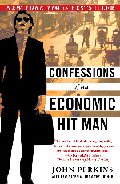
Confessions of an Economic Hitman

I finally just got through reading Confessions of an Economic Hitman and was quite impressed with how John Perkins ended it. The bulk of the book is an interesting look on what is a well documented – but unfortunately still misunderstood, often concealed or misrepresented, and usually ignored – phenomenon of the modern American empire building, and how we have transformed from a respected Republic to a feared and increasingly disreputable Empire.

If like me, you find both the current administration's explanations for anti-Americanism baffling (some people in the world "hate freedom") and that often heard from the left inadequately vague (it's because of our foregn policy) - then this book should prove to be very valuable.

It’s a good read because it’s a narrative and offers an inside look at the thrilling (if highly disturbing) true stories of economic manipulation, CIA-orchestrated coups and assassinations, revolutions and invasions in Afghanistan, Panama, Ecuador, Iraq, Iran, Saudi Arabia, etc. Overall he does a good job of presenting these complex stories and phenomenon in an understandable way with out being simplistic, accusatory, or bombastic.

It is also refreshing to hear the accounts from someone ‘on the inside’ whereas these types of books usually come from those on the losing side of the system, through academics or journalists, and are therefore somehow more easily discredited. So it’s fascinating to hear how things really work from someone who knowingly orchestrated and benefited tremendously from the system.

The problems with the system are many and obvious – starvation, wars, terrorism, climate change, environmental destruction, loss of culture – and I’ve talked a lot about them in different contexts. Taken as a whole the interconnections between these issues are clear, regardless of what we call the resulting in a phenomenon: the ills of globalization, overshooting the limits to growth, hitting ‘the funnel walls.’

One telling statistic in particular, on the global wealth gap, highlights the failure of our current system in a relatively simple way – “The income ratio of the one-fifth of the world’s population in the wealthiest countries to the one-fifth in the poorest countries went from 30 to 1 in 1960 to 74 to 1 in 1995. And the World Bank, the U.S. Agency for International Development, the IMF, and the rest of the banks, corporations, and governments involved in international “aid” continue to tell us that they are doing their jobs, that progress has been made.” [p.206]

The reason I was impressed with the ending was because I think he came to the only reasonable conclusion about how to address these serious consequences of this system:

“It would be great if we could just blame it all on a conspiracy, but we cannot. The empire depends on the efficacy of big banks, corporations, and governments – the corporatocracy – but it is not a conspiracy. This corporatocracy is ourselves – we make it happen – which, of course, is why most of us find it difficult to stand up and oppose it. We would rather glimpse conspirators lurking in the shadows, because most of us work for one of those banks, corporations, or governments, or in some way are dependent on them for the goods and services they produce and market. We cannot bring ourselves to bite the hand of the master who feeds us.” [p.217]

“…We need a revolution in our approach to education, to empower ourselves and our children to think, to question, and to dare to act.” [p.222]

As I’ve said before in regards to the neo-classic macro-economic system, it is hard for us to let go of because its positive benefits in terms of human progress have been so many, however to continue blindly cling to it as the end-all-be-all, even as it has become clear that it devastatingly inappropriate, will lead to our demise.

Internalizing these issues is at the heart of Sustainable Development. He addresses the role that existing institutions and organizations can lead the way towards Sustainability, which is a central to this program, as the name suggests –Strategic Leadership Towards Sustainability. He states:

“There is nothing inherently wrong with banks, corporations, and governments – or with the people who manage them – and that they certainly do not have to compose a corporatocracy. I could go into detail about how the problems confronting us today are not the result of malicious institutions; rather, they stem from fallacious concepts about economic development. The fault lies not in the institutions themselves, but in our perceptions of the manner in which they function and interact with one another, and of the role their managers play in that process. In fact, those highly effective worldwide communications and distribution networks could be used to bring about positive and compassionate changes.”[p.222]

The change must start within each one of us, conscious of our place in the greater context of the System (Level 1) – individual within an organization within society within the biosphere; it must involve a shared (science-based) vision of Success (Level 2) – not violating the 4 sustainability principles; and have an effective Strategy (Level 3) for achieving success – backcasting from principles. To expect this from every single individual may seem unrealistic, but it is also unnecessary, because at a certain point, a tipping point will be reached, and society, with all of its economic and social institutions will shift.

Another very interesting concept Perkins raises is “The Prophecy of the Condor and the Eagle.” I’ve talked a lot about a bifurcation point for society in the near future – the Limits to Growth team’s computer models mostly show things changing somewhere in the middle of this century, and nearly every lecturer we’ve had, whether they’ve been working on these issues for 10 or 30 years, have similar comments about a feeling that things are beginning to change in terms of sustainable development.

The Prophecy of the Condor and the Eagle – which is popular in Latin American cultures, but apparently very similar to many prophecies from around the world – predicts a period of great change starting in the late 1990s. He describes it as follows:

“…back in the mists of history, human societies divided and took two different paths: that of the condor (representing the heart, intuitive and mystical) and that of the eagle (representing the brain, rational and material). In the 1490s, the prophecy said, the two paths would converge and the eagle would drive the condor to the verge of extinction. Then, five hundred years later, in the 1990s, a new epoch would begin, one in which the condor and eagle will have the opportunity to reunite and fly together in the same sky, along the same path. If the condor and eagle accept this opportunity, they will create a most remarkable offspring, unlike any ever seen before.” [p.210]

Something to look forward to – it will require us to wake up to the current reality and the role we each play individually and collectively in creating that reality every day.

Stay going…

Sunday, February 19, 2006

Pay at the Pump

While running the risk of turning this blog into little more than a news-feed of current articles, I can’t help but throw this one from the NY Times on here because it breaks down a poignant issue – one that could have a hugely positive ripple effect in the US and the world, and push us one small step closer towards an Ecological Economic system.

It talks about the benefits of a tax shift in the US, imposing a gas-tax at the pump, off-set by a break in income taxes. Two key points –

1) the fact that while self-proclaimed “free-market” advocates typically try to over-simplify the situation and argue that such a move is an artificial regulatory burden, it actually brings us closer to a true free-market system when the true costs of fossil fuels are accounted for (e.g. military spending to secure cheap oil as the article mentions, and the monstrous, and sometimes unquantifiable costs of health problems (estimated $24-450 billion per year from vehicle pollution in the US), destruction of ecosystem services (monetarily unquantifiable) and climate change ($200 billion for Katrina alone) that stem from burning gas). Including these “external” costs of fossil fuel use is called internalizing externalities and a core concept of environmental economics, as well as an important part of ecological economics. It becomes a matter of obvious common sense when a whole-systems perspective is taken, but can be easy to overlook when we have a fractured, reductionist perspective.

2) When it talks about how people would just take the income tax savings and buy the same amount of gas, the article hints at something called the “rebound effect.” It’s a typical problem in the environmental economic model, because in general environmental economics doesn’t explicitly acknowledge and deal with limits to growth in the same way ecological economics does by setting “caps” or quotas – limits – to how much of a resource can be used (at a sustainable rate equal to or below the rate of replenishment) or how much waste can be returned into the biosphere (at a rate equal to or below the rate of assimilation of the waste by the natural systems). As the article points out, in this case the accounting for the true costs of gas will result in less use, as there are so many behavioral and technological alternatives to our current transportation patterns.

This type of move is long overdue and has been politically misrepresented for too long. Its important to do whatever you can (voting, writing your congressmen, etc) to support these kinds of developments. Anyway – here’s the article:

http://www.nytimes.com/2006/02/16/business/16scene.html?_r=1&oref=login


A Way to Cut Fuel Consumption That Everyone Likes, Except the Politicians

By ROBERT H. FRANK
Published: February 16, 2006

SUPPOSE a politician promised to reveal the details of a simple proposal that would, if adopted, produce hundreds of billions of dollars in savings for American consumers, significant reductions in traffic congestion, major improvements in urban air quality, large reductions in greenhouse gas emissions, and substantially reduced dependence on Middle East oil. The politician also promised that the plan would require no net cash outlays from American families, no additional regulations and no expansion of the bureaucracy.

As economists often remind their students, if something sounds too good to be true, it probably is. So this politician's announcement would almost surely be greeted skeptically. Yet a policy that would deliver precisely the outcomes described could be enacted by Congress tomorrow — namely, a $2-a-gallon tax on gasoline whose proceeds were refunded to American families in reduced payroll taxes.

Proposals of this sort have been advanced frequently in recent years by both liberal and conservative economists. Invariably, however, pundits are quick to dismiss these proposals as "politically unthinkable."

But if higher gasoline taxes would make everyone better off, why are they unthinkable? Part of the answer is suggested by the fate of the first serious proposal to employ gasoline taxes to reduce America's dependence on Middle East oil. The year was 1979 and the country was still reeling from the second of two oil embargoes. To encourage conservation, President Jimmy Carter proposed a steep tax on gasoline, with the proceeds to be refunded in the form of lower payroll taxes.

Mr. Carter's opponents mounted a rhetorically brilliant attack on his proposal, arguing that because consumers would get back every cent they paid in gasoline taxes, they could, and would, buy just as much gasoline as before. Many found this argument compelling, and in the end, President Carter's proposal won just 35 votes in the House of Representatives.
The experience appears to have left an indelible imprint on political decision makers.

To this day, many seem persuaded that tax-cum-rebate proposals do not make economic sense. But it is the argument advanced by Mr. Carter's critics that makes no sense. It betrays a fundamental misunderstanding of how such a program would alter people's opportunities and incentives.

Some examples help to illustrate how the program would work. On average, a family of four currently consumes almost 2,000 gallons of gasoline annually. If all families continued to consume gasoline at the same rate after the imposition of a $2-a-gallon gasoline tax, the average family would pay $4,000 in additional gasoline taxes annually. A representative family with two earners would then receive an annual payroll tax refund of $4,000. So, if all other families continued to buy as much gasoline as before, then, this family's tax rebate would enable it to do so as well, just as Mr. Carter's critics claimed.

But that is not how things would play out. Suppose, for example, that the family was about to replace its aging Ford Explorer, which gets 15 miles per gallon. It could buy another Explorer. Or it could buy Ford's new Focus wagon, which has almost as much cargo capacity and gets more than 30 miles per gallon. The latter choice would save a whopping $2,000 annually at the pump. Not all families would switch, of course, but many would.

From the experience of the 1970's, we know that consumers respond to higher gasoline prices not just by buying more efficient cars, but also by taking fewer trips, forming carpools and moving closer to work. If families overall bought half as much gasoline as before, the rebate would be not $2,000 per earner, but only $1,000. In that case, our representative two-earner family could not buy just as much gasoline as before unless it spent $2,000 less on everything else. So, contrary to Mr. Carter's critics, the tax-cum-rebate program would profoundly alter not only our incentives but also our opportunities.

A second barrier to the adoption of higher gasoline taxes has been the endless insistence by proponents of smaller government that all taxes are bad. Vice President Dick Cheney, for example, has opposed higher gasoline taxes as inconsistent with the administration's belief that prices should be set by market forces. But as even the most enthusiastic free-market economists concede, current gasoline prices are far too low, because they fail to reflect the environmental and foreign policy costs associated with gasoline consumption. Government would actually be smaller, and we would all be more prosperous, if not for the problems caused by what President Bush has called our addiction to oil.

At today's price of about $2.50 a gallon, a $2-a-gallon tax would raise prices by about 80 percent (leaving them still more than $1 a gallon below price levels in Europe). Evidence suggests that an increase of that magnitude would reduce consumption by more than 15 percent in the short run and almost 60 percent in the long run. These savings would be just the beginning, because higher prices would also intensify the race to bring new fuel-efficient technologies to market.

The gasoline tax-cum-rebate proposal enjoys extremely broad support. Liberals favor it. Environmentalists favor it. The conservative Nobel laureate Gary S. Becker has endorsed it, as has the antitax crusader Grover Norquist. President Bush's former chief economist, N. Gregory Mankiw, has advanced it repeatedly.

In the warmer weather they will have inherited from us a century from now, perspiring historians will struggle to explain why this proposal was once considered politically unthinkable.

Robert H. Frank, an economist at the Johnson School of Management at Cornell University, is the co-author, with Ben S. Bernanke, of "Principles of Economics." E-mail: rhf3@cornell.edu


Stay going...

Saturday, February 18, 2006

Fossil Free Sweden & Clean Development Mechanisms

Strapped for time and will write more on my thesis project soon – but for now, this article from the Financial Times gives a pretty nice, basic introduction to the concept of the Clean Development Mechanism (CDM) under Kyoto:

http://news.ft.com/cms/s/fc4d2d90-9e91-11da-b641-0000779e2340.html

Also, I’m long overdue for a post on sustainability initiatives in Sweden, but this write up is again, a nice overview of the some of their initiatives, at least in the energy sector. The ambitious goal of getting off fossil fuels all together by 2020 was announced by the PM in the fall, and the country is coming together to get it done.

http://www.guardian.co.uk/print/0,,5394081-103681,00.html

Stay going…