Saturday, November 19, 2005

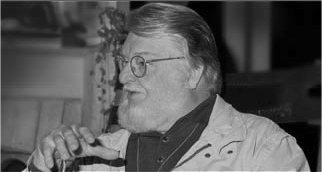
Herman Daly tells it like it is...

The following is an excerpt from a 1995 interview with Herman Daly conducted by the Developing Ideas Digest, put on by the International Institute for Sustainable Development. A little outdated, but the fundamental structure is what is in question here, and that has only gotten worse…

DI: Why is free trade necessarily bad for the environment? ...

Daly: My problem with free trade is partly due to the environment - but it's larger than that. I think it's a bad social policy and bad environmental policy. By free trade, what I mean is deregulated international commerce. So the opposite of free trade is not autarky or no trade. The opposite is not state trade or total monopolization of trade. The opposite of free trade, which is deregulatory, is regulated trade. Trade which is regulated in the national interest by governments involved. And the notion that there should be no national interest [in] this trade across national boundaries, that the state has no interest in this, that this should be left entirely to the mutual benefit of the trading parties ... I mean imagine if this logic were applied say to corporations - individuals within corporations just trade with each for their own mutual advantage - nonsense! ... Every deal that corporation people make has to be vetted up through higher authorities to make sure that it's really in the interest of the larger entity. And so I think the same thing is the case with trade across national boundaries. The reason again goes back to community because if you have the free flow of goods and capital and, increasingly, labour across national boundaries, then you really lose any possibility of policy at the national level. You can't have an interest rate policy that's different from your neighbour because capital is mobile. You can't have environmental cost internalization standards that are different from other people because if you have higher standards that'll raise your prices higher than your trading partners', and you put your own people at a disadvantage. So you have to have some equalizing kind of tariff.

So the argument is not that there should be no trade. Trade can be very beneficial. But the argument is that trade should not be based on standards-lowering competition. You have to maintain certain standards. And standards-lowering competition can be weakening the environmental standards to give cheapness, weakening social insurance standards and safety standards to get cheapness. Weakening standards of child labour ... throwing in prison labour even, [about] which even GATT says, 'Prison labour is too much, we'll retaliate against that.' So I think maintaining these social standards which have been actually hard-won over many years - I mean the length of working day, that's been limited; child labour, these sorts of things. You can make products cheaper if you lengthen the working day, if you employ children ... and so I think there has to be this national community protection of basic standards. We can't allow that to be competed away in the name of free trade.

Interestingly, the classical doctrine of free trade as it came from David Ricardo is much more in line with what I've just been saying because in that system, capital did not cross national boundaries. Capital stayed at home and labour stayed at home. The only things that were traded were goods. So you really did have a much more community/national orientation. You have national capital cooperated with national labour - albeit with class conflict, the national community was able to contain that class conflict. You had national labour and national capital cooperating to make national goods, and those goods that competed internationally with other countries and their teams.

Nowadays that's all gone, nowadays you have free capital mobility and so you have a capitalist of one nation [saying] to the labourers of that nation, 'Sorry guys, we live in a global economy, I can employ labour at one-fifth of what you want and I can bring the product right back here and sell it, so you guys are out of line, too bad.' And the labour comes back and says, 'Well gee you know, there are bonds of national community.' 'I just told you we live in a global community. All that stuff is over with. All that old national stuff that caused wars. We live in a global economy. Everything is going to be peace now. Don't you want the Chinese labourer to be as rich as you are - are you a racist?', and on and on. So this idea of mutual responsibilities in a national community [is] being dissolved by this idea of the global world economy. We have a global community now superseding the national community - that's passé, now it's global community. That sounds good if you say it fast enough and don't stop to think about. But it's empty. There is no global community. Where community really exists is at the national and subnational level where people take on mutual responsibilities for each other. Not at the global. Now maybe someday there will be a global community. But our view - of John Cobb and I - is we're all in favour of global community, but it would have to be a federation of strong national communities - a community of national communities. And the present vision is not of a federated community of communities, the present vision is of a cosmopolitan world without borders in which you erase national community and replace it with this globalized single sort of tightly integrated world community.

So the vision of a globally integrated economy is really a single system. You have one tightly integrated system that's mutually dependent across the globe. That's a very dangerous kind of system - something goes wrong, you're in big trouble. We prefer nations to be much more fundamentally self-sufficient, not totally self-sufficient, that's too expensive. But to the degree possible, strive for self-sufficiency and maintain loose international trading relations to make up for where it's hard to be self-sufficient. I mean everyone can make their own aspirin and matches, you don't need to trade multinationally for that. But there are some things that you do need to trade for. That's kind of the vision that we put forward, and you maintain more local control over you economic life. If you don't, then control is shifted far away and the foreigners who control the capital investment in your country may be lovely decent people, they may even be nicer than the local people, but they're far away and they don't really know or have an interest and a feel for what happens there. This is a vision that John Maynard Keynes expressed very similar kinds of notions [to] when he wrote on national self-sufficiency, and his views along with the others have kind of been swept aside in this globalization mania, which really serves the interests of the global multinational corporations because what holds them in check is the nation state - the rules of the nation. So if they can sort of weaken the nation and play off one against the other, then they don't have any real restraints. ...

The other way of controlling international capital would be to have international government and some people advocate that. I see that as frightening. International government. Some things have to be international, for example, we have to deal with global CO2 and things [like that] at a global level. But again that has to be a federation of national governments because once you have a treaty for global CO2 or something, who's going to enforce it? It has to be the national governments who signed the treaties. They have to be strong enough to enforce within their own boundaries the conditions that they agreed to in the international treaty. And if capital, labour and goods flow freely across their borders they don't have any basis for exercising the control that they agreed to. Long-winded answer, I'm sorry.

No problem, Herman – for the full interview click here.

And apologies to the anonymous commenter who finds the sign off a bit cheesy – I hear ya – but it stems from a phrase big-wave surfers use to encourage focus when things get hairy, and seeing as the ride to sustainability is the biggest wave humanity has ever faced, I think it’s appropriate. So – Stay going…


Tuesday, November 15, 2005

New Courses, New Routes...

It’s been a crazy couple of weeks, and the blog has suffered, I apologize. After wrapping up the introductory course over two weeks ago now, with presentations and exams, we had a couple of days off (checked out Copenhagen, a beautiful and very fun city), and then had half a week of introductory lectures to the three courses for the second half of this term – Strategic Management for Sustainability, Advanced Societal Leadership, and Engineering for a Sustainable Technosphere.

The material for all three promises to be very inspirational once again. The engineering course will be focused on the “double explosion” of population and energy consumption. There is a common misconception that as populations grow in “developing” countries, energy use will ramp up in correlation. But the mind-boggling reality is that as these populations grow exponentially (with the exception of China – should stay around a cool billion) their demand for energy will also be growing at an exponential rate – not because of the population growth, but in addition to it. This leaves a lot of tough challenges for the engineers of the world to come up with means for supplying that energy, to say the least. So far the groups are looking at the big energy use sectors like agriculture, buildings and transportation, as well as a the whole array of alternative, renewable technologies. In each case it becomes clear that organizational efficiencies (designing upstream for less demand, ala McDonough’s China project) will be imperative – but even so, sustainable alternatives to fossil-based energy production will be required.

Advanced Leadership will look more in depth into the concepts of Organizational Learning, Transformational Change, Linked Networks, Systems Dynamics, Tipping Points, and Engagement. Facilitation, communication and presentation skills will also continue to be in focus. The Strategic Management course will give an overview of what’s out there in the field of strategic management, and how the various schools of thought can best be related to Sustainable Development. The reading lists for all of the courses are great – with the likes of The Fifth Discipline, Tipping Point, Mid-Course Correction, Built to Last, and Strategy Safari to name a few – I’ll try to get some better recaps of the readings up when there is time.

Last week we had an excellent field trip to Lund for a meeting with Tetra Pak (a huge global packaging company) where some members of our group presented to a selection of representatives from their various environmental departments. Not the most hostile crowd, as you can imagine, but it was really exciting to see some classmates run through some of the things we had been learning in the setting of a large corporation. They did a great job, and took a great approach – and I think got some of the Tetra Pak people thinking about how they can better frame their existing environmental and social initiatives and management systems.

The next day we took off for Stockholm with a stop at an Eco-Municipality on the way. It was cool to see one in person, and get a tour. It was essentially just a cluster of houses – so not a true, mixed use development. But the houses were very nice, each had a garden and a yard and solar panels on the roof. The materials and design were all chosen with regards to their environmental impact, and the houses were heavily insulated with heat-exchangers for air circulation. The site had an integrated sewage treatment system through a series of ponds and wetlands that acted as a “living machine” to purify the waste water before it was reintroduced into the watershed. All in all, there wasn’t much above and beyond, or even to the level of what my boys out in Colorado at Steeprock have been doing for years, but it was cool to see the integrated cluster, and the Swedish take on residential green building.

Finally we arrived in Stockholm, and I just can’t say enough about the beauty of that city. We stayed in a great hostel, very nice and clean and Swedish with big rooms and easy access to the city. On Tuesday and Wednesday we had the huge treat of all attending a big upscale Clean Vehicles and Clean Fuels conference, which I’ll go into in more detail in another post. As a side note though, we also scored some left over tickets to the Tuesday night reception at the City Hall, where they hand out the Nobel Prize. This was one of the craziest buildings I’ve ever been in with an eclectic intermixing of architectural styles from a broad range of history and geography. We got a full tour, including the Blue Hall where the award banquet happens, but ate a gourmet spread and guzzled some free wine in the Gold Hall (literally covered in gold, from the floor to the 40 foot high ceilings) – who said sustainability was about sacrifice??

On Friday we checked out some museums and went to the offices of the Stockholm Environmental Institute (SEI), which again deserves its own post. We also hooked up with some students in other sustainability / environmental masters programs in Lund and Stockholm, which was cool, got to see some more student pubs, and checked out a bit of the night life around the city. I got a huge kick out of the name of the city’s hip / funky neighborhood – SoFo, as it is south of some street that starts with “Fo” and clearly is no SoHo… but still a really cool area, with a great vibe and some great people.

All in all a pretty hectic and exhausting couple of weeks. The time has changed and the darkness comes early – especially in Stockholm where our shadows were 12 feet long at high noon. But we’ll push through. I hope you are all doing well. Stay going…

Monday, October 31, 2005

Systems Thinking, Who’s to Blame and Jack Johnson…

I’ve danced around the concept of Systems Thinking before, but it really is a central thread to Strategic Sustainable Development, and a vital aspect to dealing with complex systems (as the name implies) like ecosystems and societies.

(I’ve also been neglecting too much to put some of these things I’m writing about into the context of the 5-level framework – it’s very helpful in framing a holistic, strategic approach – so I’ll try to get in the habit. Anyway, this relates to Level 1 (System) and Level 5 (Tools)).

In general Systems Thinking involves taking a holistic view, setting boundaries for the system you’re analyzing, identifying the components of the system and the interactions between them. It looks at causal relationships and feedbacks between components over time and space.

The discipline, which is inherently trans-disciplinary, works against reductionism and is meant to help us understand and communicate complex problems. In order to do so, the most basic tool is the Causal Loop Diagram. A simple one looks like this:


Clearly, this is a very generalized and simplified model, but that’s the point to some extent, and it starts to give perspective on how various components of a system interact and influence each other. The plus signs indicate a reinforcing action (positive feedback loop – the poorer you are, the more you over-harvest, the more you over-harvest, the scarcer your resources, and the poorer you are), while the minus sign indicates a stabilizing action (negative feedback loop – the scarcer your resources, the less people they can support).

CLD’s a key part of Systems Analysis – one can then move on to Systems Dynamics and start modeling how outside affects impact the system, create mathematical and computer models to try to get a sense of how the system will react to various situations.

This type of Systems Thinking is non-linear, and usually difficult for us to think about when we get more than 3 or 4 components involved, without the help of such models and computers. The non-linear nature of systems brings up an interesting point about blame and guilt. In his book The Fifth Discipline Peter Senge describes it in the following way:

“A linear view always suggests a simple locus of responsibility. When things go wrong, this is seen as blame – “he, she, it did it” – or guilt – “I did it.” At a deeper level, there is no difference between blame or guilt, for both spring from linear perceptions. From linear view, we are always looking for something that must be responsible.”

Systems Thinking allows you to move on from that view, and realize that “feedback” is responsible for changes in the system, and that everyone shares responsibility for problems generated by a system. Through Systems Analysis, the interactions become clearer, and you can start to identify leverage points within the system that can mitigate the undesirable effects and enhance the desired.

I couldn’t help but think of Jack Johnson’s song Cookie Jar when getting into this stuff… An excerpt:

well "it wasn't me" says the boy with the gun
sure I pulled the trigger, but it needed to be done
because life’s been killing me ever since it begun
you can't blame me because I'm too young

well you can't blame me, sure the killer was my son
but I didn't teach him to pull the trigger of a gun
it’s those video games and his TV screen
you can't blame me, it’s those images he sees

you can't blame me says the media man
I wasn't the one who came up with the plan
I just point my camera at what the people wanna see
it’s a two way mirror man, you can't blame me

you can't blame me says the singer of the song
and the maker of the movie which he based his life on
it's only entertainment as anyone can see
it's smoke machines and makeup man
you can't blame me

it was you, it was me, and it was every man
we've all got the blood on our hands
we only receive what we demand
if we want hell then hells what we'll have

The song goes on to suggest that TV is the main problem and we should all just turn it off. That might be a simplistic view – I don’t think the problem’s solved that easily – but he’s probably right to some extent that TV and media is a big leverage point for a variety of problems.

Anyway, if you were to look at school shootings, from this approach, you could start to get a sense of what feedbacks were involved. I think we’d find it has a lot to do with violations of SP IV – systematic undermining of people’s capacity to meet their fundamental needs. Certainly no easy answers there, but hopefully that gives a sense from a different angle how framing these problems in the context of the whole system of individuals within organizations within society within the biosphere (Level 1) and define success with the Sustainability Principles (Level 2) we can approach them strategically, using Backcasting (Level 3) and determine what Actions to take (Level 4) and what Tools can help us (Level 5)…

Happy Halloween to everyone – not really such a big deal over here, apparently, but I’m heading to Copenhagen to check that scene out and finally get out of Karlskrona for the first time since I got here, as we’ve got a couple days off before starting our new courses on Wednesday…. Also, a big shout to Bruschi, back starting and helping the Pats seal a close win yesterday – wish I coulda seen it. Hope everyone’s doing well. Stay going…

“I knew I had to say something to strike him kinda weird, so I shouted – ‘I like Manfred Max-Neef, and his beard'…”


A bit more on Max-Neef. Aside from being a great guy and interesting character, he’s done some incredible work in the broad areas of development, social sustainability and economics.

Two of his major focal points during his lectures here were around the concept of Transdisciplinarity (essentially a way of avoiding reductionism, or ‘over-specialization’ and promoting whole systems thinking, much more on all of this later) and the “Needs Matrix” that he has developed.

The Needs Matrix is based on identifying the 9 fundamental human needs and separating them from the satisfiers of those needs. The needs he identifies are…


… in no particular order and with none more important than the other (it is difficult to see how Subsistence wouldn’t take some sort of priority, seeing as without it none of the others would be possible – but his argument is that if any aren’t met, you aren’t really alive anyway).

In terms of keeping needs distinct from satisfiers, it’s easiest to use some examples – food, shelter, clothing aren’t needs, they are satisfiers of the need Subsistence. He also goes further to distinguish between certain types of satisfiers:

Destroyers: paradoxical satisfiers that are supposed to satisfy one need, but end up destroying one’s ability to meet many other needs – these are almost always meant to meet the need for protection and include things like censorship, authoritarianism, and arms races – which in various ways inhibit people from meeting their needs of freedom, participation, creation, etc.

Pseudo-satisfiers: these generally create a false sense of satisfaction, and can overtime making harder to meet the need they were originally intended to satisfy. They include things like status symbols (identity), stereotypes (understanding), prostitution (affection), and fashion/fads (identity).

Inhibiting satisfiers: usually associated with habits and customs these ones can over-satisfy one need while making it difficult / impossible to meet other needs – an overprotective family is an example, in obsessing on meeting the need for protection, it can inhibit affection, understanding, participation, idleness, identity and freedom. Commercial TV probably falls under this category too, in satisfying idleness, understanding, creation and identity can be inhibited.

Singular satisfiers: these ones satisfy one need and are largely neutral to others and include things like many social programs (i.e. soup kitchens satisfy subsistence), and curative medicine (as opposed to preventative, satisfying subsistence). Max-Neef suggests sports spectacles satisfy idleness, I would argue you could also tack on participation and identity, maybe even affection, understanding and freedom (Go Pats!!).

Synergic satisfiers: satisfy one need, and as a result satisfy many other needs simultaneously. Examples include preventative medicine (protection, understanding, participation, subsistence), cultural TV (idleness, understanding), breast-feeding (subsistence, affection, protection, identity), and growing your own food (subsistence, understanding, participation, creation, identity, freedom).

Max-Neef has also developed a process for communities to go through these needs and identify in what ways their cultural traditions, institutions, etc. inhibit them from meeting their needs, so they can get some perspective and start to deal with how to improve things. This approach is a good fit with the sustainability principles, in that in a way they give a definition for success for social sustainability (building on the 4th Principle). The idea is that these are fundamental needs that don’t change between cultures or over time (except maybe the very long-term). It is just the satisfiers that vary greatly between cultures and generations.

Given the complexity and subjectivity of social systems, this isn’t easy stuff to wrap your head around – but I think it’s helpful in getting a bigger picture view, and starting to make sense of a lot of those vague, difficult to articulate ideas about societal problems. In thinking about all the strange pathologies we see in our society in the US, as well as those all around the globe, it starts to make some sense when viewed through this lens, where needs are more than food, shelter, clothes. Things like school shootings, anorexia, Ritalin for the kids, alcoholism, racism, depression, consumerism, gangs, etc can arguably be traced back to some fundamental needs not being met. Then we can look upstream and see how to ensure that they do get met.

Not to suggest that that’s an easy undertaking, by any means, but at least the ground work can be laid for a strategic approach to solving some of these problems.

Stay going…

Friday, October 21, 2005

Social Sustainability and the Economic Model...

First things first, a warm welcome to Bruschi back in the Pats practice rotation! An impressive feat and welcome piece of news... So, I've been getting a lot of heat for not posting in a while, my apologies, but as expected things continue to get busier. We have group presentations (on various tools or concepts related to Sustainable Development - my group's doing EMS (Environmental Management Systems)) and exams next week, so time to buckle down a bit. But here is my last essay from our module on Social Sustainability. Read it with a caveat: the assignment was structured as a way for us to just think things through and play with some ideas, it certainly isn't meant to be an academic paper in the traditional sense - we were limited to 5 pages on a monstrous topic, so generalizations are broad, thoughts incomplete, many of the statements made have volumes of evidence and reasoning behind them that aren't stated, and some knowledge is assumed to be known by the readers (our profs). We were asked to write on the 4th principle and what more could be said on it. I took the liberty of focusing on the current global economic system and its integral role in Social Sustainability.... enjoy:


Number IV In Your Programs, But Number 1 In Your Hearts…. Social Sustainability!

At present, global society is unsustainable. This fact is evidenced through the effects of this unsustainability, including systemic starvation (1 billion people), global warfare (“on terror”, Israel, Palestine, Iraq, Afghanistan, Korea, Kashmir, Sudan), loss of cultural diversity (Westernization / Americanization), and political and economic tyranny (WTO, IMF, Unilateralism) on the global level. We are witnessing the paradox of globalization – while the world is becoming ‘smaller’ with increased international interaction, communication, and trade, there is an undeniable loss of cultural diversity and a breaking down of the social fabric on the global scale.

A key component to this social disarray is a lack of understanding about what constitutes success in terms of social sustainability. The fourth sustainability principle outlines the conditions for success, and Max-Neef’s nine categories of need provide a useful compliment by defining human needs. However, the current dominant model for success is drastically different. It focuses primarily on the growth of material wealth and the assumption (or faith) that that will result in the fairest and most efficient allocation of resources, hence maximizing social welfare. Implicit is the assumption that meeting the need of subsistence, followed by further growth in material consumption will necessarily eventually lead to the satisfaction of other needs. Convincing enough of the key actors in the global socio-political-economic system that there are other criteria for success is a huge challenge, as it requires a drastic shift in thinking and a breaking away from strong, entrenched models.

During my first semester of college I took Econ 1: The Price System. Early on, Professor Anderson explained about assumptions that must be made so we could analyze economic systems scientifically. The basic assumptions include:

1. People have rational preferences among outcomes that can be identified and associated with a value.

2. Individuals maximize utility and firms maximize profits.

3. People act independently on the basis of full and relevant information.[1]

I was shocked. It didn’t make sense that an entire discipline could be founded on assumptions that were so obviously, intuitively flawed. There was an implication that if you could not make that leap in your mind to accept these assumptions, you weren’t cut out for this high-powered discipline, and because of the speed of the course, most easily internalized them and moved on without looking back.

The neoclassic economic model has brought societies very far, very fast. The feats of humankind in the past 150 years are obvious and many, which works to reinforce faith that the model is successful. However, it has become increasingly clear since the 1970s that the model is outdated. Aside from the limits to growth imposed by the biosphere, the model is failing in its aim to improve social welfare. In order to address the challenge of changing such a massive, complex system, it is necessary to have some strategic guidelines.

Donella Meadows’ identification of ‘leverage points’ in a system provides a helpful starting point. What she deemed the most effective point of intervention – the power to transcend paradigms – relates directly to Max-Neef’s lecture discussion on quantum physics and the existence of alternate realities. While we all have the capacity to at least intuitively understand this on some level, there is great difficulty in abandoning our constructed realities, and letting go into what Meadows’ refers to as ‘Not Knowing’. Furthermore, there is little one can do outside of themselves to create such a transcendence in others. So while it may be the most effective, it is probably not the most realistic, at least at this time.

Her second leverage point is to change the paradigm, or mindset of the system. As discussed, the neoclassic economic model is deeply entrenched, and due to its past success has the ardent faith of most of the key actors in power. With regards to how one could possibly change such an ingrained model, Meadows summarizes Thomas Kuhn:

In a nutshell, you keep pointing at the anomalies and failures in the old paradigm, you keep speaking louder and with assurance from the new one, you insert people with the new paradigm in places of public visibility and power. You don’t waste time with reactionaries; rather you work with active change agents and with the vast middle ground of people who are open-minded.[2]

In the case of our global economic system and its impact on social sustainability, one does not have to look far to find the ‘anomalies and failures.’ Exploitation of labor, unfair Free Trade, and the un-reigned power of multi-national corporations are a few far-reaching failures of the system with devastating effects global society. All over the globe, peoples’ capacity to meet their needs is being systematically undermined.

A more concerted, organized and credible effort – beyond the reactionary, theatrical protesting of WTO meetings – needs to be made, working with those change agents and the vast middle ground of the open-minded to illustrate that the current model is outdated, no longer viable, and a major threat to global social sustainability. Simultaneously, successful aspects of the emerging new model (some combination of the products of the ‘New / Second / Third Industrial Revolution’, such as ‘Ecological Economics’, ‘Sustainable Business’, ‘Natural Capitalism’, etc) must continue to be highlighted and emulated.

Closely related to changing the model, is the 3rd point on addressing the goals of the system. Neoclassical economics are concerned with the allocation of scarce resources and the maximization of utility and profit. To those ends, the goals of the system have become growth and efficiency, or in more concrete terms higher GDP. Some perspective is needed on the absurdity of such goals for their own sake, which is again difficult because these are rather basic values of the ingrained system. Still, the advent of more relevant indicators of progress (ISEW, GPI, GNH) has provided us with the basis for more effective evaluation of the system’s success and highlights the flaws of the model.

Such modifications in the system’s framework relate to the 4th point, concerning a system’s ability to self-organize. What’s needed is a more specific re-articulation of the existing goal of the system – of what we mean by maximizing utility – along with some other key terms. The system must shift from seeking physical growth for its own sake to development, or ‘growth of value’ and from valuing efficiency for its sake to effectiveness or ‘efficiency with purpose’. The chances for success at this leverage point are greater, as it does not require transcending paradigms, abandoning the existing model, or even changing its goals. The familiar components are still there, just approached in more honest and effective ways. Markets (that are fair), growth (of value), efficiency (with purpose), and self-interest (that is enlightened) will remain integral parts of an evolved, sustainable, capitalist economic system. Ideally, the adaptation and evolution of the current system result in a smooth and peaceful transition to the new sustainable economic model.

We are starting to see some very exciting, concrete (though preliminary) changes take place as the system slowly begins to become aware of the “new” realities it faces in terms of the ecological sustainability. A shift from goods-based to services-based business models along with mechanisms for internalizing externalities (i.e. Kyoto) are starting to prompt businesses rethink the existing structure of the model.

This shift will likely be more difficult in terms of social sustainability. Cross-cultural understanding is a challenge, as is quantifying happiness and identifying needs. Since the invention of the “under-developed” nation by Truman in 1949, the imposition of various elements of the dominant American culture – both explicit and implicit (mass media, consumerism, Western democracy, industrial agriculture, etc) – on others has been seen as a noble cause. Regardless of intentions, this approach has proven to be destructive and open to manipulation by multi-nationals aiming to open up new markets and exploit inexpensive labor. The political story of good intentions and the corporate vested interest, make the structural changes needed for social sustainability harder to achieve. It is easier to conceptualize how systematic increases of pollutants and physical degradation of natural systems is unsustainable, than it is to see that selling goods and providing jobs to ‘developing’ economies in an unregulated global economy with an imbalance of power is systematically undermining peoples’ capacity to meet their needs.

One way or another, the system will change. Hopefully, through continued pressure on lower-level leverage points (the rules, information flows, positive and negative feedback loops, time delays, etc.), the structure, goals, and the shared model of the system will change at an appropriate pace. Only then will we be able to realize a socially sustainable future.


[1] Wikipedia. “Neoclassical Economics.” On the World Wide Web at: http://en.wikipedia.org/wiki/Neoclassical_economics.

[2] Meadows, Donella. 1999. “Leverage Points: Places to Intervene in a System.” The Sustainability Institute. Hartland, VT, USA.

Tuesday, October 11, 2005

either / or ... both / and

So, in the seemingly mysterious way that is its nature, quantum physics has been streaming into and popping up in my life here in all sorts of ways over the past couple of weeks. It started with a mention in one article, then a conversation, another article, some emails, a lecture, and now it seems to be everywhere. I finally sit down to write about it after our first lecture with Chilean economist Manfred Max-Neef. Reading some of his work, hearing him lecture and having a brief chat with him has been a mind opening experience. It’s yet another one of those “ah-ha” moments, when things that seemed so complex become so simple, and right back to mind-bogglingly complex. The transformational change continues (more on this later).

The conceptualizations are difficult for our (Western) minds to grasp, because we have the concepts of rationality so ingrained through generations, and institutionalized throughout our own lives. But they slowly start to make more sense the more one spends time with them, and the more open one’s mind is to the possibility that our current view of our reality is incomplete.

The “crisis” for Newtonian theory and our natural laws came in the first few decades or so of the 1900s, when in a quest to find the building blocks of matter, we found that there was nothing there – just a series of potential states, which we could not observe without affecting them. We (or quantum physicists, I guess) finally had to come to grips with the fact that we could not separate ourselves from nature. There was no possibility of outside objective observation at this level – our observation changed reality. (The transformational change that the scientists making these “discoveries” went through personally was apparently very trying, as I suppose it is for anyone who experiences existential “crisis”, when one is forced to confront the crumbling of one’s constructed reality).

Also at that the quantum level we have whole duality of light issue – is it energy or matter? A continuous wave, or streaming packets of matter? This contradiction defied a basic tenant of classical, Western, linear, Aristotelian, rational logic, which seem elementary at the macro level:

1) axiom of identity: A is A

2) axiom of non contradiction: A is not non-A

3) axiom of the excluded middle: there is no third term T, that is simultaneously A and non-A

The duality of light gives us an example of A being A and non-A – being itself and its opposite, simultaneously. In the quantum world then, we see we are dealing with drastically different laws than in the macro world. It is no less than a different reality – another level of reality that we are a part of but for the most part not conscious of. At this other level of reality, there is T, that is the axiom of the included middle.

One practical example of this concept, that is maybe more specifically relevant (or easier to grasp as relevant) to our studies here was proposed by Max-Neef today. One dominant school of thought when thinking about ‘environmentalism’ is that it is a series of trade-offs between things that are either good for growth* or good for the environment – either A or non-A – a choice between two contradictory forces. But on another level of reality, the two are one and the same and that can be called sustainability. It is not that simple, but starting to conceptualize that can be helpful.

On some level, intuitively, I think we all know what it is, but it is not something that can be communicated with language easily, if at all. It also helps explain why some of these synergetic ‘solutions’ we come across in dealing with sustainability - like some of the amazing results, not thought of and unintended, that spring from Permaculture design, green building / development projects, new business models, etc – seem almost magical to us. They are the result of non-linear systems thinking and therefore tap into, or at least flirt with another reality.

I’m sure any attempt I make to explain concepts surrounding quantum physics come off as amateurish and full of holes, but hopefully it will provide some useful food for thought, regardless. I’m sure we’ll be revisiting many of these ideas... Stay going.

*[by growth, it is important for us to differentiate between physical growth for growth’s sake and growth of value. This requires a shift from our obsession with efficiency (in whatever it is we’re doing) to a focus on the effectiveness of what we’re doing, and how it is helping us to meet human needs worldwide (including many that are not met in lives of the richest people in the richest nations. Much more to follow on all of this.]

Saturday, October 08, 2005

Understanding systems...

First, thanks very much for the comment with the link to the Newsweek Article on William McDonough’s work in China – very interesting and exciting stuff. Particularly intriguing for me is to consider how he’s able to implement a lot of the progressive, innovative aspects in the development, given the top-down authority that the government there commands. Can be used for good or bad, I suppose.

Also – this week I somehow stumbled upon this brief article on GHG emissions:

US Greenhouse Gas Emission Slows Down

October 7, 2005 9:30 a.m. EST

Andrea Moore - All Headline News Staff Reporter

Washington, DC (AHN) - The chief U.S. negotiator on global warming acknowledges Thursday the nation's pace in emitting greenhouse gases has slowed.

Harlan Watson, a State Department special envoy, tells the Senate Environment and Public Works Committee, "One can argue whether it's slowing down fast enough, but it is slowing down."

The United States releases about 6.6 million tons of carbon dioxide, methane and other gases into the air each year; a quarter of the world's total emissions, which scientists blame for heating the atmosphere like a greenhouse.

Emissions are growing at the rate of about 1.5 percent a year. That growth rate is expected to drop to about 1.3 percent by 2012 as industries adopt newer and cleaner technology.

I post it only to point out how misleading headlines can be at times. The headline seems pretty upbeat because it suggests at first glance that the US is scaling back it’s GHG emissions, when in fact the opposite is true – we’re increasing our emissions at a solid rate of 1.5% every year. That rate of growth is expected to slow to 1.3% a year by 2012 – but that, of course, is 1.3% of a larger number, because between now and 2012, we’ll continue to emit more and more GHG each year.

Again, I’m not a huge fan of getting into the global change debate (despite the fact that it is probably the biggest, most urgent challenge we face) because it is “in the leaves” – and gets away from the core principle problems about how we meet our needs. But this concept exemplifies the difficulties of whole systems thinking.

An interesting study was conducted about this, using this example of CO2 emissions. Researchers from MIT (John Sterman and Linda Booth Sweeney) explained the dynamics of global warming to MBA students at Harvard, Stanford, and MIT and presented them with two scenarios showing projected CO2 emissions rates (flows) and CO2 levels in the atmosphere (stocks), and asked them to identify what the trends would be given various cut backs in emissions. Almost two-thirds of the students failed to correctly recognize the trend (which would be continued global warming) because they didn’t consider the rate at which CO2 was pulled from the atmosphere (through photosynthesis, and the impact deforestation has on natural systems capacity to do that) or the fact that the CO2 already in the atmosphere would continue to have effects even if human emissions stopped all together.

Anyhow, misunderstanding about the basic functions of these systems can promote in-action, and a lost sense of urgency about what our current reality really looks like – so it’s important to be clear.

Stay going…