Monday, November 22, 2010

eARTh 350 kicks off

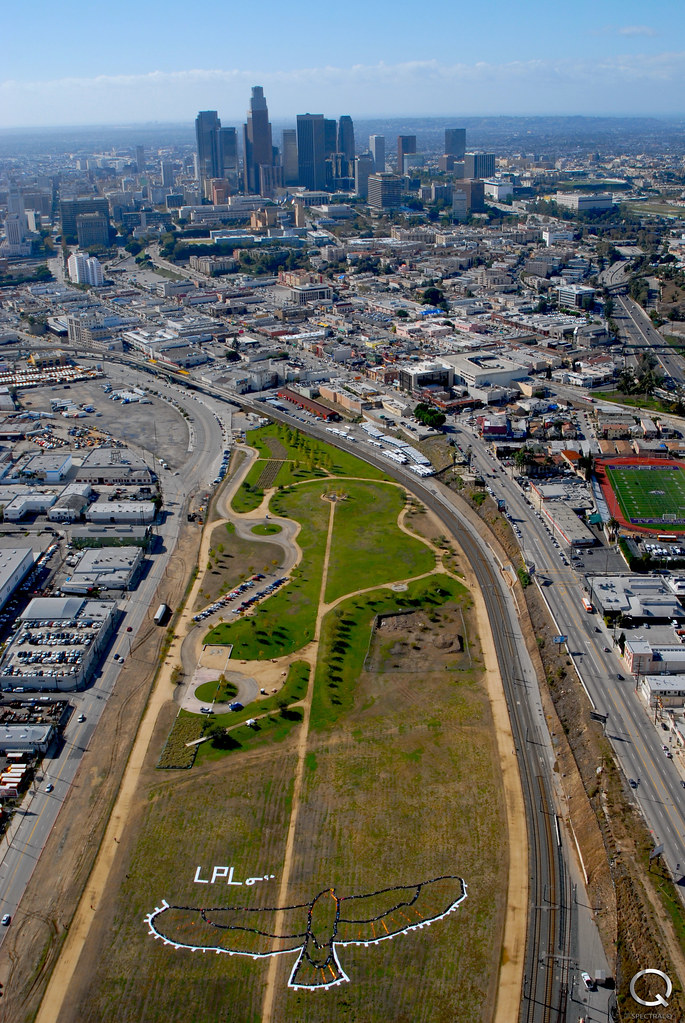
On Friday I wrote about the launch of eARTh 350.  Well, it's launched.  The AFP article below tells the story, and has been reposted on some 2,420 news sites and blogs, I just wanted to make it 2,421.  And show you some of the early pictures taken from the satellite:

350 Earth - Los Angeles

350 Earth - Santa Fe
350 Earth - Santa Domingo, DR
350 Earth - Mexico City
350 Earth - Delta Del Ebro, Spain


Art on planetary scale shines spotlight on climate change
LOS ANGELES — The first global art show on climate change kicked off this weekend, launching several symbolic performances seen from space that bring people and planet together to highlight the hazards of global warming.
From the US southwest to spots in countries like China, Egypt, India and Spain, thousands of volunteers were coming together for the weeklong photo-performance project that ends November 27, just ahead of UN climate talks in Cancun, Mexico.
Using human bodies as the main media, the show was organized by US environmentalist Bill McKibben and his 350 Earth advocacy group, whose name points to the number of parts per million that most scientists agree is an acceptable upper level of carbon dioxide in the atmosphere.
Currently, that level is about 390 parts per million.
The group brought the global project into focus Saturday in the United States and Spain.
In Santa Fe, New Mexico, more than 1,000 Girl Scouts and other residents holding blue posters crammed into a dry riverbed to form a human "flash flood" depicting where the Santa Fe River should be flowing.
"It's hot in here, there's too much carbon in the atmosphere!" the volunteers chanted.
At 10:53 am, participants flipped their cardboard posters to the blue side so a passing satellite could photograph them from orbit.
People also gathered in Delta Del Ebro, Spain to walk through a huge maze conceived by artist Jorge Rodriguez Gerada, while in New York a painting depicting the New York and New Jersey coastline after a seven-meter (23-foot) rise in sea levels was unveiled on a rooftop and photographed from space.
Thom Yorke, lead singer of rock supergroup Radiohead and an advocate of climate action, put a succinct message about the 350 Earth project on his band's website.
"The plan is to make images visible from the skies to remind those in Cancun that we are running out of time. We can't keep putting this off," Yorke wrote.
On Sunday thousands were gathering at a state park outside Los Angeles to form a giant image of an eagle taking flight over a field of solar panels, while on Monday in Mexico City, thousands of children will create a huge hurricane, with the number 350 depicted in the eye of the storm.
Mumbai will see schoolchildren group together in the shape of an elephant to represent the "elephant in the room" that is climate change.
In Australia, a torch display will form the number "350," in a warning about the risk of more wildfires if global warming is not halted.
And in Iceland, artists at the foot of a receding glacier plan to arrange red rescue tents in the shape of a giant polar bear.
McKibben acknowledged before the project that technical terms can be weak when it comes to inspiring people to change, but he was confident the images photographed from space would resonate with those who see them.
"One of the things I hope this achieves is to remind people that we live on a planet. Just like Venus and Mars, we are a hunk of rock out in space and our future depends on, among other things, the gaseous composition of our atmosphere," McKibben said.
The UN forum has made dismal progress toward a global deal to reduce harmful emissions, and McKibben said was he not optimistic about the Cancun talks.
"I think it is going to be a longer process than everyone has hoped."
-----
Stay going. 


Friday, November 19, 2010

350 Earth Art

Climate art visible from space.  That's what's coming up next from the 350.org crew.  350 Earth will be the first art exhibit visible from space.

Based on the premise that the earth rise photo created an immediate shift in consciousness for humanity - providing a dramatic, visual reminder that we're indeed on a spaceship, and its the only one we've got.

Even if we didn't articulate it this way, it drove a visceral realization that we've got energy coming in from the sun, but materials don't come in and go out (aside from the odd meteor or satellite) - there is no "away" for poisons we create or pull out of the earth's crust (the basic premise behind Sustainability Principles 1 & 2); and that we can't continually use up or destroy the resources faster than they regenerate naturally (SP 3); and we've got to find basic ways to live together, respect each other and keep the social fabric from falling part (SP 4).

A new report from UC Berkeley shows that dire messages about climate change can backfire if presented too negatively - increasing skepticism and inaction.  It says people generally see the world as just (or want to believe it is) - and reject the idea that we would create an apocalyptic for ourselves and future generations.  We all know we're not 100% rational creatures.

As I write I'm listening to Wake Up - the new album from John Legend and the Roots the revisits classic songs that drove social movements in the '60s and '70s.  It's clear we need powerful art like that now.  It's a good thing we're getting it.

From November 20-28 artists and citizens at over a dozen locations will create massive art installations that satellites will photograph from space.

Bill McKibben, in many ways the voice of 350.org said "I think it's going to be very powerful. Art gets to people in ways that science doesn't."

The series of installations are timed to happen before the annual international climate negotiations - COP 16 - happening in Cancun, Mexico in early December.  Most people aren't expecting much to come out of these meetings.  Sometimes that's when things can happen.

Stay going.


Ban the Plastic Bag

Tough to go wrong with this beat:


Thanks to Green Sangha for creating the video.

Stay going...


Tuesday, November 09, 2010

The face of climate disruption in 2010

A great video from NRDC gives a quick glimpse of some of the impacts of climate disruption this year, showing that this is not a "maybe" problem that we can deal with in the future:


Stay going.

Wednesday, November 03, 2010

Rural Hip Hop

Hip hop & organic farming... even if it is viral marketing, I can't resist...


Thanks to Climate Denial Crock of the Week where I found this one...

Stay going.

Saturday, October 30, 2010

Prop 23 & Green Jobs

A friend sent me a recent Opinion piece from the Wall St. Journal titled "Prop 23 and the Green Jobs Myth" by T.J. Rodgers - founder and CEO of Cypress Semiconductor, which acquired SunPower Corp - one of our country's largest solar companies - in 2003.

Image source: Solar Richmond, www.solarrichmond.net
In the piece, Rodgers supports the fossil-fuel industry-backed Prop 23 by essentially trying to tie it to California's economic troubles, and claiming it will hurt job growth.  I can appreciate the position that putting a direct price on pollution can look like an added cost, but I hold that it's correcting a market distortion - we are and will continue to pay the costs of extracting and burning fossil fuels whether we do so directly (by pricing carbon) or indirectly (through healthcare, destruction of personal property & infrastructure, loss of life, undermining ecosystem services, etc.).  

Image source: The 6th Extinction
Attempts to tie a direct line from AB 32 (California's climate change legislation) to the state's current economic woes are disingenuous. First, the law hasn't gone into effect yet.  Second, the initial targets of AB 32 are so easy to meet, that the costs will be more than offset by cost savings from efficiency upgrades and better processes.  I know Econ 101 tells us that business would already have realized all of those cost-savings if the potential was there, but businesses are run by people, and as we know people aren't always perfect - the vast majority of businesses have huge unrealized opportunities for cost-savings with little or no upfront investment.

For example, EDF's Climate Corps program hires MBA students to help big companies identify efficiency opportunities - this year 50 interns generated $350 million in savings for these companies. Starting to send the price signal to the correct source - which AB 32 will do, and which Prop 23 is trying to stop - will accelerate these efforts and further innovations to make our economy more efficient, more effective, and more competitive. 
At Cisco Systems, fellow Emily Reyna developed a plan
for installing energy-saving devices in R&D labs that
could save an estimated $8 million per year (with an
18-month payback) and reduce Cisco’s greenhouse
gas emissions by 3%. Source: EDF

I also disagree with the suggestion that the green jobs that AB 32 (and other policies like it) will promote, are a false promise.  I do think most reports on both sides of this topic require a lot of assumptions and aren't perfect.  Still, here's one that finds that policies that incentivize more efficient energy use -- it looks at the case of California, where energy efficiency policies from 1977-2007 created 1.5 million jobs while eliminating fewer than 25,000: http://www.nytimes.com/2008/10/20/business/20green.html.  An overview of some other studies that show the expected job growth impacts of AB 32 is available in this Climate Progress post

In his piece, Rodgers talks about how SunPower moved manufacturing offshore because of the "high cost and red tape" of manufacturing in the US.  This opens up another whole conversation, but I think this rationale eludes the basic point -- labor's inexpensive in places like the Philippines and Malaysia (where their plants are) because wages and the general standard of living is very low.  That's obviously not what we want for California and Californian workers. More to the point, the piece only talks about the jobs manufacturing solar panels -- the real appeal of green jobs is that most of them can't be outsourced - the jobs installing and maintaining the solar panels (as well as financing the solar panels, weatherizing houses, lighting retrofits, installing green roofs, farming local foods, etc. etc.) 

SunPower's Malaysian fab plant.
Image source: EngineerLive
The piece also claims European subsidies that have helped support the market for renewable energy there have had a net-negative impact on jobs. Here is a White Paper from the National Renewable Energy Lab refuting the study cited to support this claim.  Much of the growth in the solar market (and presumably SunPower's revenue) over the past 5 years can be attributed to these policy structures of the major solar markets in Germany and Spain.  In 2003, when Cypress acquired SunPower it was losing money - outsourcing jobs likely had some impact in turning that around, but I'd wager a much stronger driver was the solar market exploding over that time -- due in no small part to these policies and Europe's cap & trade system, as well as the awareness building that hundreds of groups have done on the true costs and impacts of fossil fuels.

Of course, it's surprising to read a piece supporting Prop 23 authored by the Chair of solar company, as it's so clearly bad for the company's growth.  It reminds me of Tony Hayward who said when he took over BP: "We had too many people trying to save the world" (http://www.huffingtonpost.com/kevin-grandia/bp-ceo-hayward-we-had-too_b_585610.html) -- he promptly went to work trying to turn that around, getting super-efficient in a traditional, linear sense, and cutting corners to disastrous effect. 

Here are a few of yesterday's headlines from Point Carbon, that covers the full-fledged carbon market that has been in effect in Europe for 5 years.  The second one makes a very flexible system even more flexible -- the companies impacted by this will likely make a lot more money than they currently are as a result.  The third one removes any legitimacy of trying to tag cap and trade as a "tax".  


  • Market praises California's cap-and-trade design Published: 29 Oct 2010 California's cap-and-trade system will spur investment in clean energy, market sources said.
  • California boosts offset limit in cap-and-trade system Published: 29 Oct 2010California emitters can use offsets to meet 8 per cent of their compliance obligation.
  • California to give away majority of allowances Published: 29 Oct 2010California will hand out most of its allowances at the start of its cap-and-trade programme.

Here's another good take on Proposition 23 from Thomas Friedman: http://www.nytimes.com/2010/10/06/opinion/06friedman.html?_r=2&ref=opinion

I respect Mr. Rodger's leadership of SunPower Corp, and hope he will come around and see how policies like AB 32 (or anything that puts a price on carbon) will help his company, and create jobs and improve efficiency and competitiveness.

Finally, the piece states: "While our state government frets over issues like... the habitat of the red-legged frog, our economy—the habitat of homo sapiens—is a disaster."  This brings up the most essential point. We need to really internalize the reality that the economy is a wholly-owned subsidiary of the biosphere.  The red-legged frog's habitat and our habitat are one and the same.  Without policies like AB 32 we will degrade that habitat to the point where it won't be able to support our civilization - and at that point it won't matter how many jobs we were or weren't able to create in the short-term.  Luckily, these policies will create jobs and create a whole new economy that is sustainable for the long term.

Californians, please vote "no" on Prop 23 on Tuesday.

Stay going. 

Friday, October 29, 2010

Global Work Party

It's been a crazy couple of weeks - the 4th Annual Climate Leadership Summit of the ACUPCC was a great success a couple of weeks ago in Denver, and last week we had the opportunity to participate in an exciting milestone of Penn State's strategic sustainability planning process.  In both cases, high-level decision makers from our country's institutions of higher learning were coming together to essentially imagine themselves and their institutions in a sustainable future, and look back to 2010 to see what we had done to get there.

Bill McKibben performs a similar backcasting exercise in his latest piece in the Solutions journal - looking back from 2100 and recounting how the events of 2010 and 2011 started a real concerted push towards 350 ppm.  The Global Work Parties last month were a big help and inspiring - see the video below.

I think it's particularly important to share this video ahead of Tuesdays elections.  Here in the US we get a very slim and distorted slice of the real news - we forget the rest of the world is out there - and the discourse on climate disruption and solutions is very different than what's coming across in our political arena (like this campaign ad for West Virginia Democrat Joe Manchin where he literally shoots the cap & trade bill with a rifle (and not because it's a free-market solution based on Republican principles) - http://www.youtube.com/watch?v=xIJORBRpOPM)

China, India, Europe, and the rest of the world are moving ahead with solutions, and we're risking missing the greatest economic opportunity, certainly since the Industrial Revolution, and possibly ever, by bowing to vested interests.  We've got to wake up and get moving towards a visions of a sustainable future.


Stay going.